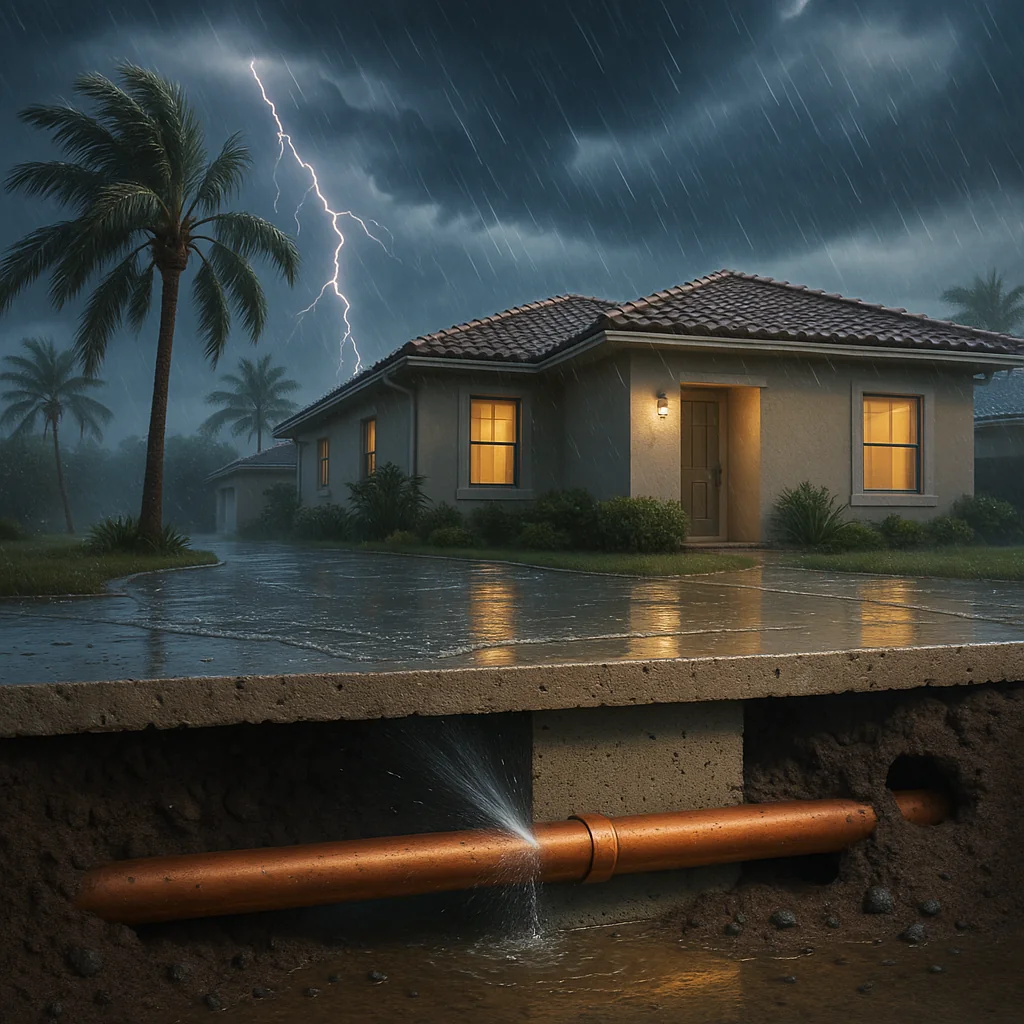
Understanding the Connection Between August Thunderstorms and Underground Pipe Damage
August thunderstorms in Tampa bring more than just dramatic lightning displays and temporary flooding. The intense weather patterns characteristic of Florida’s wet season create a perfect storm of conditions that directly impact underground plumbing systems. When afternoon thunderstorms dump several inches of rain in just hours, the ground beneath homes and businesses experiences rapid saturation cycles that place tremendous stress on pipes embedded in concrete slabs. This phenomenon is particularly pronounced in the Orlando and Tampa Bay regions, where soil composition and water table fluctuations amplify the problem.
The relationship between summer storms and slab leaks isn’t immediately obvious to most property owners. However, professional leak detection specialists consistently observe a surge in emergency calls during and immediately after the August thunderstorm season. The combination of soil expansion, hydrostatic pressure, and temperature fluctuations creates conditions that can compromise even relatively new plumbing installations.
The Science Behind Storm-Induced Pipe Stress
Florida’s unique geological composition plays a crucial role in how thunderstorms affect underground infrastructure. The state’s predominantly sandy soil mixed with limestone and clay creates a dynamic environment that responds dramatically to moisture changes. During August, when afternoon thunderstorms occur almost daily, the ground undergoes repeated expansion and contraction cycles.
Soil Expansion and Contraction
When heavy rainfall saturates the soil surrounding a concrete slab foundation, the ground swells significantly. Sandy soils can expand by several percentage points, while clay-heavy areas experience even more dramatic changes. This expansion creates lateral pressure against foundation walls and upward pressure beneath slabs. Copper and PEX pipes running through these slabs experience stress at connection points and anywhere the pipe changes direction.
As the soil dries between storm events, it contracts, creating voids and settling that can cause slabs to shift or crack. These movements, though often measured in fractions of an inch, are sufficient to stress pipe joints and create weak points where leaks develop over time.
Hydrostatic Pressure Buildup
Perhaps the most destructive force during August thunderstorms is hydrostatic pressure. When the water table rises rapidly due to heavy rainfall, groundwater exerts upward pressure on foundation slabs. In areas like University Square and surrounding neighborhoods, this pressure can reach levels that compromise waterproofing membranes and stress plumbing penetrations through the slab.
Hot water lines are particularly vulnerable during these events. The combination of external hydrostatic pressure and internal water pressure, coupled with thermal expansion from heated water, creates multiple stress vectors on pipe walls and joints. This is why hot water line slab leak repair services see increased demand following severe storm seasons.
Temperature Fluctuations and Pipe Integrity
August in Tampa brings not just rain but dramatic temperature swings. Morning temperatures in the low 70s can climb to the mid-90s by afternoon, only to drop again when thunderstorms roll through. These temperature cycles affect underground pipes in several ways.
Thermal Expansion and Contraction
Metal pipes, particularly copper, expand when heated and contract when cooled. During August, the temperature differential between morning and afternoon can cause pipes to expand and contract by measurable amounts. When this occurs daily for weeks, the cumulative stress on pipe joints and connections can lead to microscopic cracks that eventually develop into full leaks.
Condensation and Corrosion
The high humidity levels characteristic of August in Florida create ideal conditions for condensation on cold water pipes. When combined with the minerals present in Florida’s water supply and the salts in soil, this moisture accelerates corrosion. Older copper pipes are especially susceptible, developing pinhole leaks that may go undetected until water bills spike or visible damage appears.
Storm Drainage Issues Compounding Pipe Problems
Many properties in the Tampa Bay area were developed during periods of rapid growth when drainage systems were designed for typical rainfall patterns rather than the increasingly intense storm events we now experience. When storm drains become overwhelmed during August thunderstorms, water pools around foundations for extended periods.
This standing water increases the duration of hydrostatic pressure on slabs and creates additional pathways for water to penetrate beneath foundations. In neighborhoods like Seminole Heights, where many homes were built decades ago, inadequate drainage combined with aging plumbing creates a high-risk scenario for slab leaks.
Warning Signs of Storm-Related Slab Leaks
Property owners should be vigilant for indicators that August thunderstorms may have compromised their underground plumbing. Early detection can prevent extensive water damage and costly repairs.
Immediate Post-Storm Indicators
- Unexplained water pooling: Wet spots on floors that appear after storms but cannot be attributed to roof leaks or window seepage
- Pressure changes: Sudden drops in water pressure following heavy rainfall
- Hot spots on floors: Warm areas on tile or concrete floors indicating hot water line leaks
- Sound of running water: Hearing water flow when all fixtures are turned off
- Meter activity: Water meter continues running when no water is being used
Developing Problems Over Time
Some storm-related damage manifests gradually over weeks or months following the August thunderstorm season:
- Gradual increases in water bills without corresponding usage changes
- Cracks appearing in floor tiles or concrete
- Musty odors developing in rooms without obvious moisture sources
- Foundation settling or new cracks in walls
- Mold or mildew growth along baseboards
Geographic Risk Factors in the Tampa Bay Region
Not all areas face equal risk from storm-induced slab leaks. Several geographic and demographic factors influence vulnerability.
High-Risk Neighborhoods
Areas with older housing stock, poor drainage, or high water tables experience more frequent storm-related plumbing issues. Communities in Northdale and similar neighborhoods built during the 1970s and 1980s often have original plumbing that has endured decades of Florida’s harsh conditions.
Soil Composition Variables
Properties built on reclaimed land or areas with high clay content experience more dramatic soil movement during wet seasons. The Tampa Bay region’s varied geology means that houses just streets apart may face vastly different risk levels.
Prevention Strategies for Property Owners
While you cannot control August thunderstorms, proactive measures can significantly reduce the risk of storm-induced slab leaks.
Drainage Improvements
Ensuring proper drainage around your property is the first line of defense. Gutters should direct water well away from foundations, and yard grading should slope away from the structure. French drains or other drainage systems may be necessary for properties in low-lying areas.
Regular Plumbing Inspections
Annual plumbing inspections before storm season can identify weak points in your system. Professional leak detection specialists use advanced technology to locate potential problem areas before they become emergency situations.
Pressure Regulation
Installing or maintaining pressure-reducing valves helps minimize stress on pipes during periods of fluctuating water pressure. This is especially important for properties with older plumbing systems.
When Rerouting Becomes Necessary
Sometimes the damage from repeated storm seasons is too extensive for simple repairs. In these cases, slab leak rerouting may be the most cost-effective long-term solution. This process involves abandoning damaged pipes beneath the slab and installing new plumbing through walls and attics, eliminating future vulnerability to ground movement and hydrostatic pressure.
The Role of Professional Detection Technology
Modern leak detection has evolved far beyond simple visual inspections. Professional services employ multiple technologies to pinpoint leaks without destructive exploratory demolition.
Electronic Leak Detection
Sensitive electronic equipment can detect the sound of water escaping from pressurized pipes, even when the leak is beneath several inches of concrete. This technology allows technicians to mark exact leak locations for targeted repair.
Thermal Imaging
Infrared cameras detect temperature variations in floors and walls, identifying hot water leaks that may not yet show visible signs. This is particularly valuable after August storms when multiple small leaks may develop simultaneously.
Pressure Testing
Isolating sections of plumbing and conducting pressure tests can confirm whether leaks exist and help quantify their severity, guiding repair versus replacement decisions.
Long-Term Climate Considerations
Climate data suggests that August thunderstorms in Florida are becoming more intense, with higher rainfall totals in shorter periods. This trend means that storm-related infrastructure stress will likely increase in coming years. Property owners should consider this when making decisions about plumbing repairs and upgrades.
Investing in modern plumbing materials designed to withstand ground movement and pressure fluctuations provides better long-term value than repeatedly patching older systems. PEX piping, for example, offers greater flexibility than rigid copper, making it more resistant to stress from soil movement.
Insurance and Documentation
Many property owners are unaware that storm-related slab leaks may be covered under homeowners insurance policies, depending on the specific circumstances and policy language. Documenting the timing of leaks relative to major storm events and maintaining records of plumbing inspections and maintenance can support insurance claims.
Professional leak detection reports provide the documentation needed to demonstrate that damage resulted from a specific weather event rather than gradual deterioration, which may affect coverage determinations.
Leave a Reply