Understanding Mold Growth Without Visible Water Sources
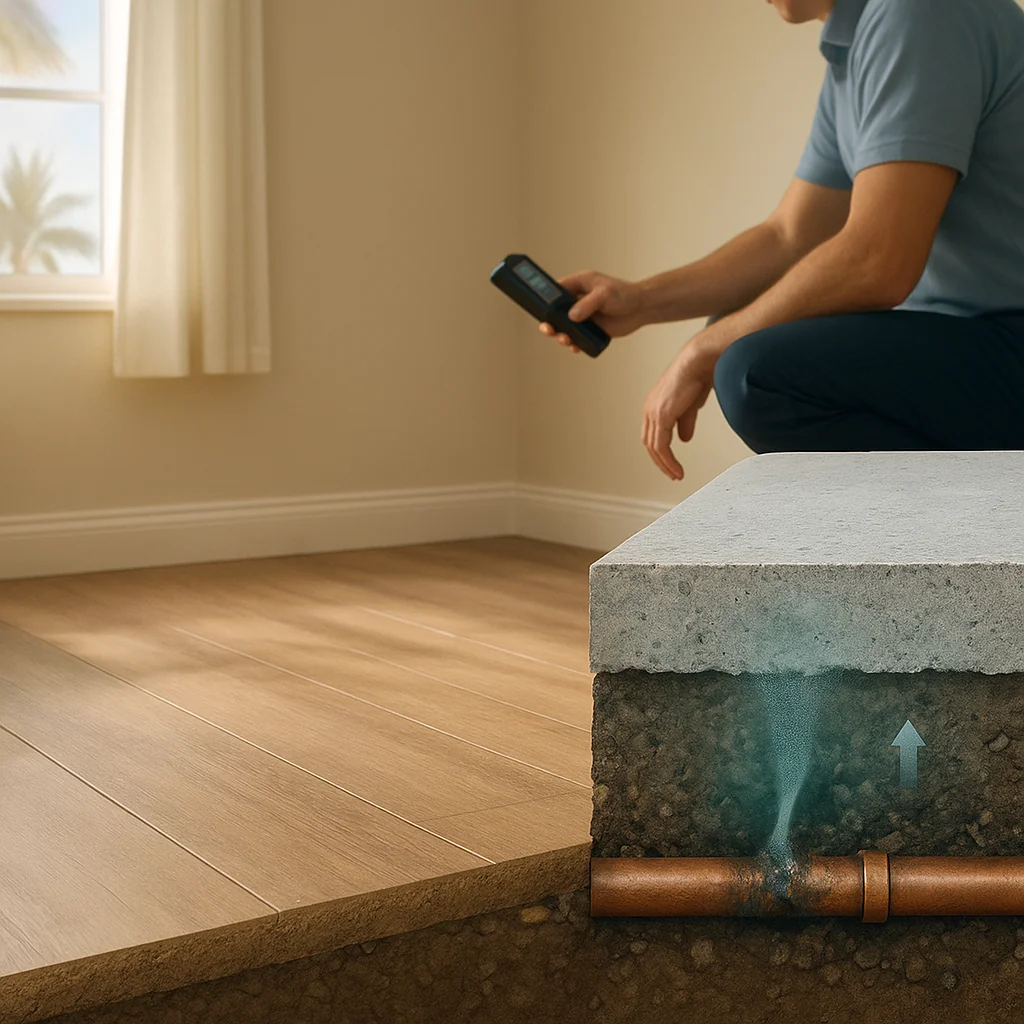
If you’ve noticed mold appearing in your Orlando home but can’t identify any visible leaks or water damage, you’re not alone. Many homeowners face this puzzling situation, unaware that the real culprit may be lurking beneath their feet. Hidden slab leaks—water line breaks occurring under your home’s concrete foundation—can silently release moisture into your living space without any obvious signs until mold begins to appear. This invisible threat is particularly common in Orlando due to our unique soil conditions, high water table, and the age of many residential properties built on concrete slab foundations.
Understanding the connection between unexplained mold growth and slab leaks is crucial for protecting your home’s structural integrity and your family’s health. While surface-level moisture issues are relatively easy to identify and address, slab leaks require specialized detection methods and professional intervention to resolve properly.
What Exactly Is a Slab Leak?
A slab leak occurs when water or sewer lines running beneath your home’s concrete foundation develop cracks, holes, or complete breaks. These pipes are embedded in or beneath the concrete slab that serves as your home’s foundation, making them virtually inaccessible without specialized equipment and expertise.
In Orlando homes, slab leaks develop for several reasons. The sandy soil composition combined with periodic ground shifting can place stress on underground pipes. Our hard water, rich in minerals, gradually corrodes copper piping from the inside out. Additionally, many homes built between the 1970s and 1990s used copper piping that has now reached or exceeded its expected lifespan. When these pipes fail, water escapes into the ground beneath your foundation, creating a moisture-rich environment perfect for mold growth.
How Slab Leaks Create Hidden Moisture
Unlike a burst pipe under your sink or a leaking roof that produces immediate visible water damage, slab leaks operate in stealth mode. Water escaping from pipes beneath your foundation doesn’t immediately flood your floors. Instead, it saturates the soil and concrete, creating persistent dampness that slowly migrates upward through your flooring materials.
This moisture travels through microscopic pores in concrete, tile grout, and even hardwood flooring. As it reaches the surface, it creates the perfect conditions for mold spores—which are always present in the air—to colonize and multiply. The process happens gradually, which is why homeowners often notice mold before they realize they have a plumbing problem.
Why Orlando Homes Are Particularly Vulnerable
Orlando’s climate and geography create a perfect storm for slab leak-related mold issues. Our subtropical environment means high humidity year-round, with moisture levels that already hover near the threshold where mold thrives. When you add hidden moisture from a slab leak to already humid conditions, mold growth accelerates dramatically.
The high water table throughout Central Florida means that groundwater sits relatively close to home foundations. During Florida’s rainy season, which extends from June through September, the water table rises even higher, placing additional pressure on foundation slabs and underground pipes. This seasonal fluctuation contributes to pipe stress and can exacerbate existing leaks.
Orlando’s soil composition also plays a significant role. The sandy soil common throughout the region shifts more easily than clay or rocky soils, creating movement that stresses rigid copper pipes. Over decades, this constant micro-movement weakens pipe joints and creates stress fractures that eventually leak. Neighborhoods like Forest Hills and University Square with older housing stock experience these issues with particular frequency.
Recognizing the Signs of a Hidden Slab Leak
Beyond mold growth, several other indicators suggest you may have a slab leak. Learning to recognize these signs can help you address the problem before extensive damage occurs.
Unexplained Water Bills
One of the earliest warning signs is a water bill that increases without explanation. If your usage habits haven’t changed but your bill has climbed steadily over several months, water may be escaping somewhere in your system. Even a small slab leak can waste hundreds of gallons daily, creating a noticeable impact on your utility costs.
Warm or Cold Spots on Floors
Walk barefoot across your floors and pay attention to temperature variations. Hot water line leaks create warm spots on flooring, while cold water leaks may produce cooler areas. These temperature differences indicate that water is flowing beneath your foundation, transferring heat or cold to the surface materials.
Sound of Running Water
When all water fixtures are turned off, your home should be silent. If you hear the faint sound of running or dripping water, especially when standing near walls or in specific rooms, this suggests active water flow somewhere in your system. The sound may be more noticeable at night when ambient noise levels drop.
Foundation Cracks and Shifting
Slab leaks saturate the soil beneath your foundation, causing it to expand and shift. This movement can create new cracks in your foundation, walls, or floors. You might notice doors and windows that suddenly stick or don’t close properly, or cracks appearing in tile flooring or wall surfaces.
Mold Growth Patterns
Pay attention to where mold appears. Slab leak-related mold often shows up along baseboards, in corners where walls meet floors, or in seemingly random spots on carpeting or flooring. Unlike bathroom mold that appears near showers and tubs, slab leak mold appears in locations with no obvious moisture source.
The Mold-Slab Leak Connection in Detail
Mold requires three elements to grow: moisture, organic material to feed on, and temperatures between 40 and 100 degrees Fahrenheit. Orlando homes provide the temperature and organic materials (wood, drywall, carpet) in abundance. The missing element is usually moisture—until a slab leak provides it.
When water from a slab leak saturates the concrete and soil beneath your home, it creates a moisture reservoir that continuously feeds humidity upward into your living space. This persistent moisture source differs from temporary water intrusion events like flooding or a one-time spill. Because the moisture renews constantly, mold colonies establish themselves and expand over time.
The types of mold that appear from slab leaks often include Aspergillus, Penicillium, and sometimes Stachybotrys (black mold). These varieties thrive in the consistent dampness that slab leaks provide. Health effects range from allergic reactions and respiratory irritation to more serious complications for individuals with compromised immune systems or existing respiratory conditions.
Professional Slab Leak Detection Methods
Locating a slab leak requires specialized equipment and expertise. Professional detection methods include several non-invasive techniques that identify leak locations without unnecessary demolition of your home.
Electronic Leak Detection
Technicians use sensitive electronic equipment to listen for the sound of water escaping from pipes beneath your foundation. These devices amplify sounds that human ears cannot detect, allowing professionals to pinpoint leak locations with remarkable accuracy.
Pressure Testing
By isolating sections of your plumbing system and monitoring pressure levels, technicians can determine whether leaks exist and in which sections of piping. Pressure drops indicate water escaping somewhere in the tested section.
Infrared Thermography
Thermal imaging cameras detect temperature variations in your floors and walls. Since leaking water creates temperature differences, these cameras reveal the thermal signature of hidden leaks, showing exactly where moisture is present beneath surface materials.
Tracer Gas Detection
For particularly elusive leaks, technicians may introduce harmless tracer gas into your plumbing lines. This gas escapes through any openings and rises through the concrete, where sensitive detectors identify its presence and pinpoint the leak location.
Repair Solutions for Slab Leaks
Once detected, slab leaks require prompt professional repair. Several approaches exist, each appropriate for different situations.
Direct Access Repair
For isolated leaks in accessible locations, partial slab penetration repair involves removing a section of flooring and concrete to access the damaged pipe directly. The pipe section is repaired or replaced, and the concrete and flooring are restored. This approach works well for single leaks in convenient locations.
Epoxy Pipe Coating
For pinhole leaks in otherwise sound piping, epoxy coating can be applied to the interior of pipes. This creates a new surface inside existing pipes, sealing small leaks without excavation. However, this method only works for specific leak types and pipe conditions.
Pipe Rerouting
When pipes have multiple leaks or have deteriorated significantly, slab leak rerouting offers a comprehensive solution. New piping is installed through walls or attic spaces, bypassing the damaged under-slab lines entirely. This approach eliminates future slab leak risks for the rerouted sections and often proves more cost-effective than multiple individual repairs.
Addressing Mold After Slab Leak Repair
Repairing the slab leak stops the moisture source, but existing mold requires separate remediation. Simply fixing the leak doesn’t eliminate mold colonies that have already established themselves in your home.
Professional mold remediation involves several steps. First, affected materials are assessed to determine whether they can be cleaned or must be removed. Porous materials like drywall and carpeting that have sustained significant mold growth typically require replacement. Hard surfaces may be cleanable with appropriate antimicrobial treatments.
The affected area must be contained during remediation to prevent mold spores from spreading to unaffected parts of your home. Air filtration devices capture airborne spores during the cleaning process. Once all mold is removed and affected areas are thoroughly dried, preventive treatments may be applied to discourage future growth.
Prevention Strategies for Orlando Homeowners
While some slab leak causes are beyond homeowner control, several preventive measures can reduce your risk and help you catch problems early.
Regular Plumbing Inspections
Schedule professional plumbing inspections every few years, especially if your home is more than 20 years old. Technicians can assess pipe condition and identify potential problems before they become major leaks.
Monitor Your Water Bill
Review your water bills monthly and investigate any unexplained increases. Catching a small leak early prevents extensive damage and costly repairs.
Maintain Consistent Water Pressure
Excessively high water pressure stresses pipes and accelerates wear. Have your water pressure tested and install a pressure regulator if levels exceed 80 PSI.
Address Foundation Issues Promptly
Foundation cracks and settling can stress underground pipes. Address foundation problems quickly to minimize pipe damage.
Control Indoor Humidity
Even without a slab leak, Orlando’s humidity supports mold growth. Use dehumidifiers to maintain indoor humidity between 30-50%, reducing mold risk from all sources.
The Importance of Professional Assessment
If you’ve discovered unexplained mold in your Orlando home, professional assessment is essential. Attempting DIY leak detection or mold remediation without addressing the underlying moisture source wastes time and money while allowing damage to continue.
Professional slab leak specialists have the training, experience, and equipment to accurately diagnose problems and recommend appropriate solutions. They understand how Orlando’s unique conditions affect homes and can identify issues that inexperienced eyes might miss. Whether you’re in established neighborhoods like Northdale or newer developments, local expertise makes a significant difference in diagnosis accuracy and repair quality.
The cost of professional detection and repair is invariably less than the cumulative damage from allowing a slab leak to continue unaddressed. Water damage, mold remediation, foundation repairs, and increased utility costs quickly exceed the investment in proper professional service.
Taking Action on Unexplained Mold
Discovering mold without an obvious source is unsettling, but understanding the potential for hidden slab leaks empowers you to take appropriate action. Don’t ignore unexplained mold or dismiss it as simply a humidity issue. The longer a slab leak continues, the more extensive the damage becomes and the more expensive repairs grow.
If you notice mold appearing in unusual locations, experience any of the other warning signs discussed in this article, or simply want peace of mind about your home’s plumbing integrity, contact a qualified slab leak detection specialist. Early detection and repair protect your home’s value, preserve your family’s health, and prevent minor issues from becoming major catastrophes.
Orlando homeowners face unique challenges due to our climate, soil conditions, and housing characteristics. However, with awareness of slab leak symptoms and access to professional detection and repair services, you can address these hidden threats before they compromise your home and health. Your home is likely your largest investment—protecting it from hidden slab leaks and the mold they cause is simply sound homeownership practice.
Leave a Reply