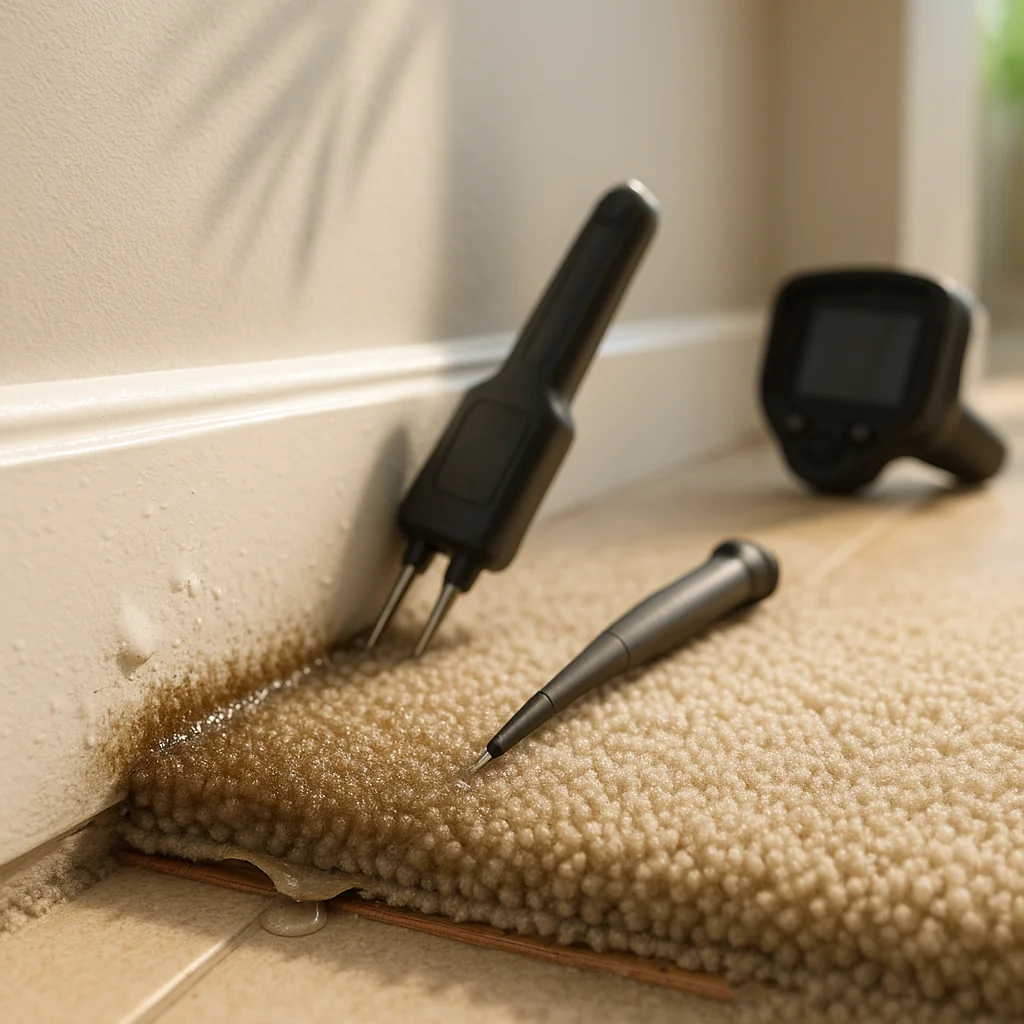
Understanding Why Your Carpet Is Wet Near the Baseboards
If you’ve discovered wet carpet near your baseboards in your Orlando home, you’re likely dealing with more than just a simple spill. This specific pattern of moisture—concentrated along the edges where your flooring meets the wall—often indicates a hidden plumbing problem that requires immediate attention. In Central Florida’s unique climate and housing landscape, where many homes are built on concrete slabs, this symptom frequently points to an underlying slab leak that could be causing significant damage behind the scenes.
Orlando homeowners face particular challenges when it comes to foundation and plumbing issues. The combination of sandy soil, high water tables, fluctuating water pressure, and the region’s intense heat can stress underground pipes over time. When these pipes develop leaks beneath your concrete foundation, water travels along the path of least resistance—often surfacing at the edges of rooms where baseboards meet the floor. Understanding what to check first can save you thousands of dollars in water damage and help you address the root cause before it escalates.
The First Things Orlando Homeowners Should Inspect
Check Your Water Meter for Continuous Flow
Before you start tearing up carpet or calling contractors, perform this simple diagnostic test that takes just five minutes. Turn off all water-using appliances in your home—dishwasher, washing machine, ice maker, and all faucets. Make sure no one flushes toilets or uses water during your test. Then, locate your water meter (typically found near the street or property line in Orlando neighborhoods) and observe the flow indicator or sweep hand.
If the meter continues to move even with all water shut off, you have a leak somewhere in your system. This test doesn’t tell you exactly where the leak is located, but it confirms that water is escaping from your plumbing system. Document the meter reading and check it again after an hour or two to quantify how much water you’re losing. This information will be valuable when you contact professionals for concrete slab leak detection services.
Examine the Pattern and Location of Wetness
The specific location and pattern of moisture provides important clues about the source. Walk around your home and document every area where you notice dampness. Pay special attention to these patterns:
- Wetness along exterior walls: Often indicates issues with outside drainage, sprinkler systems hitting the foundation, or exterior plumbing penetrations
- Moisture near bathrooms or kitchens: May suggest supply line leaks from fixtures or drain line problems
- Damp spots in the center of rooms: Frequently points to slab leaks in main water lines running under the foundation
- Wetness that appears and disappears: Could indicate a hot water line slab leak that only manifests when hot water is running
Take photos with your smartphone, noting the date and time. If the wet areas seem to grow or change over several days, document this progression. This visual record helps professionals diagnose the issue more quickly and can be valuable for insurance claims if needed.
Feel for Temperature Differences
Here’s a diagnostic technique that professional leak detectors use: carefully feel the wet carpet and surrounding dry areas for temperature variations. If the wet spot feels noticeably warm compared to surrounding areas, you’re likely dealing with a hot water line leak. Orlando’s warm climate can mask this symptom during summer months, so this test works best in air-conditioned spaces or during cooler months.
Hot water leaks often cause additional problems beyond just moisture. The constant heat can damage flooring adhesives, warp wood subflooring, and create ideal conditions for mold growth. They also waste energy since your water heater continuously works to replace the escaping hot water, leading to unexpectedly high utility bills.
Common Causes of Wet Carpet Near Baseboards in Orlando Homes
Slab Leaks: The Primary Culprit
In Orlando’s housing market, where countless homes were built on concrete slab foundations between the 1970s and today, slab leaks represent the most common cause of wet carpet near baseboards. These leaks occur when copper or PEX water lines embedded in or beneath the concrete foundation develop holes or cracks. Several factors contribute to slab leaks in Central Florida:
- Soil shifting: Orlando’s sandy soil can shift due to drought, excessive rain, or sinkholes, placing stress on rigid pipes
- Corrosion: Florida’s mineral-rich water can corrode copper pipes from the inside over decades
- Poor installation: Pipes installed without proper sleeving can rub against concrete, wearing through over time
- Water pressure fluctuations: Orlando’s municipal water systems sometimes experience pressure changes that stress pipe connections
- Age: Homes built before 1990 often have original plumbing that has exceeded its expected lifespan
Neighborhoods throughout the Orlando area, from Seminole Heights to Forest Hills, contain homes susceptible to these issues. Professional detection services use specialized equipment to pinpoint the exact location without unnecessary demolition.
HVAC Condensate Line Problems
Orlando’s year-round air conditioning usage means your HVAC system produces gallons of condensate water daily. This water should drain away from your home through dedicated condensate lines. However, these lines can become clogged with algae, mold, or debris, causing water to back up and overflow near the air handler—often located in a closet or utility area inside your home.
Check your air handler’s drip pan for standing water. In Orlando’s humid climate, condensate lines require regular maintenance to prevent clogs. If you notice wet carpet near a closet containing your air handler, this may be your issue rather than a slab leak. The solution is typically much simpler and less expensive than repairing foundation plumbing.
Window and Door Leaks During Florida Storms
Orlando experiences intense afternoon thunderstorms, especially during summer months. Wind-driven rain can penetrate even small gaps around windows and doors, particularly in older homes or those with weatherstripping that has deteriorated in the harsh Florida sun. This water can run down interior walls and collect at the baseboards, wetting carpet edges.
Inspect your windows during the next heavy rain. Look for water trails on walls, dampness on windowsills, or visible gaps in caulking. While this isn’t a plumbing issue, it can cause similar symptoms and requires prompt attention to prevent mold and structural damage.
Advanced Diagnostic Steps Before Calling Professionals
Listen for Running Water Sounds
In a quiet house, preferably at night when ambient noise is minimal, walk through each room and listen carefully near the floor. Slab leaks sometimes produce faint sounds of running or trickling water, especially in supply lines under pressure. This technique works best on hard surfaces, so if possible, pull back carpet corners in affected areas and place your ear near the concrete.
Professional leak detection companies use acoustic leak detection equipment that amplifies these sounds, allowing technicians to pinpoint leaks within inches. However, homeowners can sometimes hear obvious leaks without specialized equipment, particularly if the leak is substantial.
Monitor Your Water Bills
Pull out your water bills from the past 6-12 months and look for unexplained increases in usage. Orlando Utilities Commission and other local water providers show consumption history on their bills. A gradual increase in water usage without corresponding changes in household habits (like additional occupants or new landscaping) suggests a hidden leak.
Even small slab leaks can waste hundreds of gallons monthly. A pinhole leak in a pressurized supply line can lose 20-30 gallons per day, which adds up to 600-900 gallons monthly. Besides the water waste, you’re paying for water that’s damaging your home’s foundation and structure.
Check for Cracks in Your Foundation or Flooring
Walk around both the interior and exterior of your home looking for new cracks in the concrete slab or foundation. While small hairline cracks are normal in Florida homes due to settling, expanding cracks or cracks that appear suddenly may indicate that water is eroding soil beneath the slab. As underground water from a leak washes away supporting soil, the concrete can settle unevenly, creating cracks.
Inside your home, look for tiles that have become loose or cracked, hardwood floors that are buckling, or vinyl flooring that feels spongy. These symptoms often accompany slab leaks and indicate that moisture has compromised the flooring substrate.
Why Immediate Action Matters in Orlando’s Climate
Orlando’s warm, humid climate creates the perfect environment for mold growth. When carpet and padding remain wet for more than 24-48 hours, mold spores begin colonizing the damp materials. Mold doesn’t just damage your home; it poses serious health risks, particularly for children, elderly residents, and anyone with respiratory conditions or compromised immune systems.
Beyond mold concerns, ongoing water intrusion causes progressive damage that becomes exponentially more expensive to repair over time. Water that initially affects just carpet and padding will eventually damage subflooring, drywall, baseboards, and even structural framing. The longer a slab leak continues, the more soil erosion occurs beneath your foundation, potentially leading to settlement issues that affect your entire home’s structural integrity.
Florida’s insurance landscape adds another layer of urgency. Many homeowners insurance policies have strict notification requirements for water damage. Delays in reporting and addressing leaks can result in claim denials, leaving you responsible for all repair costs. Additionally, undisclosed water damage history can create problems when you eventually sell your home, as Florida law requires disclosure of known material defects.
When to Call Slab Leak Detection Professionals
While homeowners can perform basic diagnostic checks, pinpointing the exact location of a slab leak requires specialized equipment and expertise. Contact professional leak detection services if you observe any of these conditions:
- Wet carpet persists or returns after drying, even when you cannot identify an obvious source
- Your water meter test confirms continuous water flow with all fixtures turned off
- You hear water running sounds when no fixtures are in use
- Your water bills have increased significantly without explanation
- You notice warm spots on your floor, particularly in areas away from windows or heat sources
- Multiple areas of your home show moisture problems simultaneously
- You detect a musty odor even after cleaning and drying visible moisture
Professional leak detection companies use non-invasive technologies including electronic amplification equipment, infrared thermal imaging, and pressure testing to locate leaks without demolishing large sections of your home. This targeted approach minimizes repair costs and disruption to your daily life.
What to Expect During Professional Slab Leak Detection
When you contact a reputable Orlando slab leak detection company, they’ll typically begin with a comprehensive assessment of your home’s plumbing system. Technicians will ask about your symptoms, review your water bills if available, and perform visual inspections of accessible plumbing.
The detection process usually involves several technologies working together. Acoustic listening devices amplify the sound of water escaping from pressurized pipes. Infrared cameras detect temperature differences that indicate hot or cold water leaks. Tracer gas or dye testing can identify the path water takes through your foundation. Pressure testing isolates specific sections of plumbing to narrow down the leak location.
Most professional leak detection appointments take 1-3 hours depending on your home’s size and complexity. The investment in proper detection pays for itself by preventing unnecessary demolition and ensuring repairs address the actual problem rather than symptoms.
Preventing Future Wet Carpet Issues
After addressing your current moisture problem, take these preventive steps to protect your Orlando home from future issues:
- Schedule annual plumbing inspections: Professional plumbers can identify developing problems before they cause damage
- Monitor water pressure: Excessive pressure stresses pipes and connections; consider installing a pressure regulator if your home’s pressure exceeds 80 PSI
- Maintain your HVAC system: Regular service includes condensate line cleaning and drip pan inspection
- Improve drainage around your foundation: Ensure gutters direct water away from your home and grade slopes away from the foundation
- Replace old plumbing proactively: If your home was built before 1990 and still has original plumbing, consider repiping before leaks develop
- Install a leak detection system: Modern smart home systems can alert you to unusual water usage patterns
Orlando homeowners should also be aware of how landscaping affects foundation plumbing. Tree roots naturally seek water sources and can damage underground pipes. Maintain appropriate distances between large trees and your home’s foundation, and avoid planting water-hungry species near plumbing lines.
The Cost of Ignoring Wet Carpet Near Baseboards
Some homeowners attempt to simply dry out wet carpet and hope the problem resolves itself. This approach virtually never works when the underlying cause is a slab leak or persistent plumbing problem. The water will return, and meanwhile, hidden damage continues accumulating.
Consider the cascading costs of delayed action: carpet and padding replacement ($3-8 per square foot), baseboard replacement ($2-5 per linear foot), drywall repair ($50-100 per damaged section), mold remediation ($500-6,000 depending on extent), structural repairs (potentially $10,000+), and the actual plumbing repair. A slab leak repair that might cost $2,000-4,000 if addressed promptly can balloon to $15,000-30,000 when foundation damage, mold, and extensive water damage are factored in.
Beyond financial costs, there’s the disruption to your life. Advanced water damage often requires temporary relocation during repairs, storage of belongings, and weeks or months of contractors working in your home. Early intervention keeps problems manageable and minimizes lifestyle disruption.
Leave a Reply