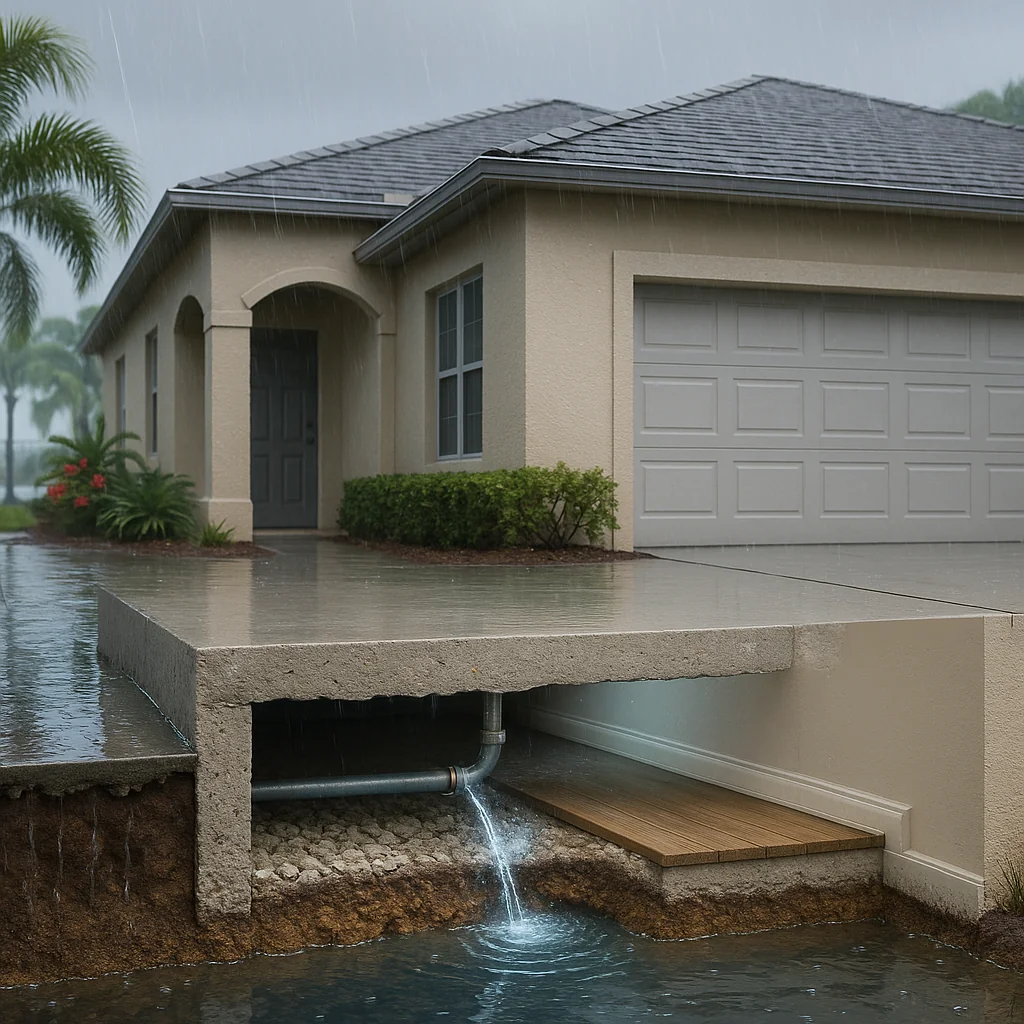
Why Musty Smells Appear After Heavy Rains
When a sudden downpour drenches Tampa, many homeowners notice a lingering musty odor that seems to rise from beneath the floorboards. This isn’t just a coincidence; excessive rain can push water into the soil beneath your slab, exposing hidden leaks and creating the perfect environment for mold and mildew. If you live in Orlando or the surrounding Central Florida area, the combination of high water tables and older concrete foundations makes slab leaks a common, yet often hidden, problem.
Understanding Slab Leaks and Their Connection to Rain
A slab leak occurs when a pipe that runs beneath the concrete foundation develops a crack, joint failure, or corrosion. Unlike visible pipe leaks, these problems stay concealed until water pressure forces the escaping water upward, carrying minerals and organic matter that fuel microbial growth. Heavy rain can accelerate this process in two ways:
- Increased Groundwater Pressure: Saturated soil pushes against the slab, forcing water through any tiny openings in the plumbing system.
- Temperature Fluctuations: Rain often brings cooler temperatures that cause metal pipes to contract, making existing weak points more likely to open.
When these conditions align, the water that seeps out of the leak can become trapped under the flooring, creating a damp environment where mold spores thrive. The result is the unmistakable musty smell that many residents associate with a rainy day.
Identifying the Signs of a Hidden Slab Leak
Before you assume the odor is merely a seasonal nuisance, look for additional clues that point to a slab leak:
- Sudden spikes in your water bill despite unchanged usage.
- Warm or wet spots on the floor that don’t correspond to a known water source.
- Unexplained cracks in walls, floors, or the foundation.
- Reduced water pressure at faucets or showerheads.
If you notice any of these symptoms after a heavy rainstorm, it’s time to investigate further. Ignoring a slab leak can lead to structural damage, increased utility costs, and health risks from mold exposure.
How Professionals Detect Slab Leaks After Rain
Modern leak detection technology allows experts to pinpoint the exact location of a leak without tearing up your floor. The most common methods include:
Electronic Acoustic Detection
Specialized microphones listen for the sound of water escaping from a pipe. The device amplifies the noise, making it possible to locate even minor leaks beneath the slab.
Thermal Imaging
Infrared cameras reveal temperature differences on the surface of the concrete. A leaking pipe often appears cooler or warmer than surrounding areas, especially after a rainstorm when the ground temperature is more uniform.
Pressure Testing
Technicians pressurize the plumbing system and monitor for drops in pressure. A sudden loss indicates a leak somewhere in the network.
For homeowners in underground pipe leak detection, these methods are routinely combined to provide a comprehensive assessment.
Repair Options: From Hot Water Line Fixes to Full Slab Restoration
Once a leak is located, the repair strategy depends on the pipe’s material, location, and the extent of damage. Common repair approaches include:
- Spot Repair: Minimal invasive access points are drilled to replace a small section of pipe.
- Pipe Rerouting: In cases where the existing pipe is severely corroded, a new line is installed beneath the slab, often using flexible PEX tubing.
- Hot Water Line Slab Leak Repair: When the leak involves the hot water line, specialized insulation and pressure testing ensure the repaired line functions efficiently.
For a complete solution, many homeowners opt for comprehensive slab leak repair services that address both the leak and any resulting damage to flooring or subfloor materials.
Local Considerations: Tampa Neighborhoods Most Affected
While the entire Tampa Bay area can experience slab leaks, certain neighborhoods face higher risk due to older construction and proximity to low‑lying flood zones. Residents of Ybor City and downtown Tampa frequently report moisture‑related odors after storms, making proactive leak detection a smart investment.
Preventive Measures to Reduce Rain‑Induced Leaks
Even if you haven’t yet encountered a slab leak, taking preventive steps can protect your home during the rainy season:
- Maintain Proper Grading: Ensure the ground slopes away from your foundation to divert surface water.
- Install a Sump Pump: A well‑maintained sump system helps manage groundwater levels beneath the slab.
- Schedule Annual Leak Inspections: Regular checks by a licensed professional can catch early signs before they become costly emergencies.
Regular maintenance not only safeguards your home’s structural integrity but also prevents the musty odors that signal a hidden water problem.
When to Call a Professional
If you notice any of the warning signs described above—especially after a heavy rain—contact a qualified slab leak specialist promptly. Early detection limits repair costs, minimizes disruption to your home, and prevents mold growth that can affect indoor air quality.
Remember, a musty smell after a storm is more than an inconvenience; it’s a potential indicator of a hidden slab leak beneath your Orlando home.
Leave a Reply