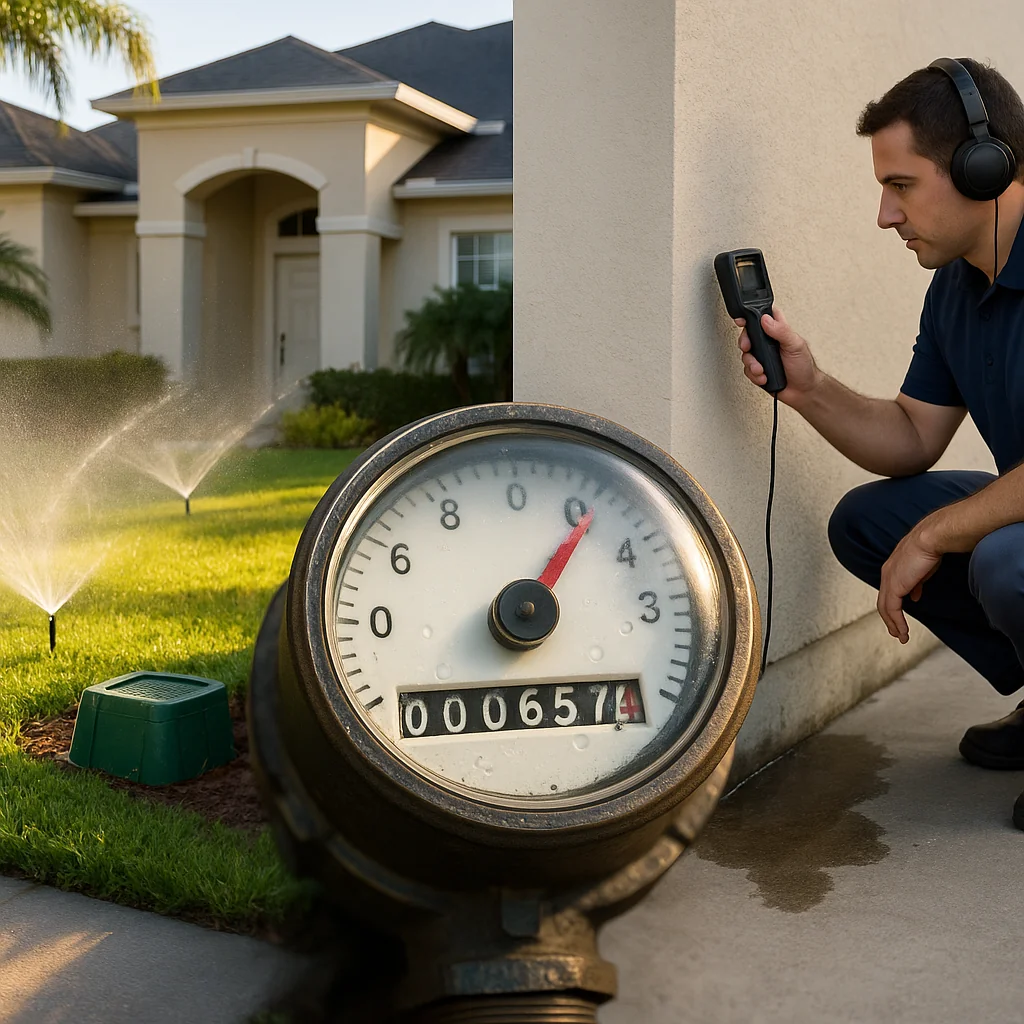
Understanding Your High Water Bill: Irrigation or Slab Leak?
If you’ve noticed a sudden spike in your water bill in Tampa, you’re likely dealing with one of two common culprits: excessive irrigation usage or a hidden slab leak beneath your foundation. While both issues can significantly impact your water consumption, they require very different solutions. Understanding the distinction between these two problems is crucial for Tampa homeowners, especially given Florida’s unique climate conditions that encourage year-round lawn maintenance and the region’s construction patterns that make slab leaks a prevalent concern.
The good news is that with careful observation and systematic testing, you can identify the source of your high water usage before it causes extensive damage or drains your wallet. This comprehensive guide will walk you through the diagnostic process, helping you determine whether your irrigation system is overworking or if you have a more serious foundation leak that requires professional attention.
The Florida Factor: Why Tampa Homes Are Vulnerable
Tampa’s subtropical climate creates unique challenges for homeowners. The combination of sandy soil, high humidity, and temperature fluctuations puts significant stress on both irrigation systems and underground plumbing. Many homes in the Tampa Bay area were built on concrete slab foundations during construction booms in the 1970s through 1990s, making them particularly susceptible to slab leaks as the infrastructure ages.
Additionally, Tampa’s water contains minerals that can corrode copper pipes over time, while the region’s occasional freezes can cause pipe expansion and contraction. These factors, combined with soil shifting and settling, create conditions where concrete slab leak detection becomes an essential service for area homeowners.
Initial Assessment: Reading Your Water Meter
The first step in diagnosing high water usage is performing a simple water meter test. This straightforward process can immediately tell you whether water is being consumed when it shouldn’t be:
- Turn off all water sources inside and outside your home, including ice makers, washing machines, and dishwashers
- Locate your water meter, typically found near the street or property line
- Record the meter reading or take a photo
- Wait 2-3 hours without using any water
- Check the meter again for any changes
If the meter has moved during this period when no water should be flowing, you definitely have a leak somewhere in your system. The next step is determining whether it’s related to irrigation or your foundation plumbing.
Isolating Your Irrigation System
Tampa homeowners typically have separate shut-off valves for their irrigation systems. Locating and testing this valve is crucial for your diagnosis:
Step 1: Find Your Irrigation Shut-Off
Most Tampa homes have an irrigation shut-off valve located near the water meter, in the garage, or along an exterior wall. It may be a separate meter specifically for irrigation.
Step 2: Perform the Isolation Test
Turn off the irrigation system completely at the main valve, not just at the timer. Repeat the water meter test described above. If the meter stops moving with irrigation off, you’ve found your problem. If it continues moving, the leak is likely in your home’s foundation plumbing.
Step 3: Inspect Visible Irrigation Components
Walk your property looking for these telltale signs of irrigation problems:
- Soggy spots in the lawn that never dry out
- Areas of grass that are significantly greener or growing faster than surrounding areas
- Visible water pooling around sprinkler heads
- Hissing sounds near irrigation valves or pipes
- Eroded soil or small sinkholes in landscaped areas
Recognizing Slab Leak Warning Signs
When irrigation isn’t the culprit, a slab leak becomes the prime suspect. These leaks occur in the water lines running beneath your concrete foundation and can cause serious structural damage if left unaddressed. Here are the key indicators:
Physical Evidence Inside Your Home
Slab leaks often manifest through observable changes within your living space:
- Warm or cold spots on floors: If you notice areas of your tile or concrete floor that feel unusually warm, you may have a hot water line slab leak. Conversely, cold spots might indicate a cold water line breach.
- Moisture or mildew: Unexplained dampness on carpets, especially along walls or in corners, suggests water seeping up from below.
- Cracks in walls or floors: As water erodes soil beneath the foundation, settling can occur, creating visible cracks.
- Baseboards separating from walls: Foundation movement from slab leaks can cause trim work to pull away.
- Sound of running water: When all fixtures are off, hearing water flowing through pipes indicates a continuous leak.
Exterior Warning Signs
Don’t limit your inspection to the interior. Check around your home’s perimeter for:
- Cracks in your foundation or exterior walls
- Areas where the ground is constantly damp, especially near the foundation
- Unexplained vegetation growth along the foundation line
- Standing water that appears after your water has been running inside
The Water Bill Analysis Method
Your water bill itself contains valuable clues. Tampa’s water rates and typical usage patterns can help you benchmark whether your consumption is abnormal:
Average Tampa Household Usage: A typical Tampa family of four uses approximately 8,000-12,000 gallons per month. This includes indoor use (showers, toilets, cooking) and outdoor irrigation. If your bill shows significantly higher usage, especially during months when you’re not irrigating heavily, a slab leak is likely.
Seasonal Comparison: Compare your current bill to the same month in previous years. Tampa’s irrigation needs are fairly consistent year-over-year. A dramatic increase without corresponding weather changes suggests a leak rather than irrigation.
Daily Usage Tracking: Some water utilities, including Tampa’s, offer online portals showing daily or even hourly usage. A slab leak typically shows as consistent 24-hour water flow, while irrigation appears as spikes during scheduled watering times.
Professional Detection Techniques
When DIY methods point toward a slab leak but you need confirmation before authorizing repairs, professional detection services become essential. Modern underground pipe leak detection uses non-invasive technology to pinpoint problems without unnecessary demolition:
Electronic Leak Detection
Professionals use sensitive electronic equipment to listen for the sound of water escaping from pressurized pipes. These devices can detect leaks through concrete, tile, and other materials, identifying the exact location of the breach.
Thermal Imaging
Infrared cameras detect temperature variations in your floors caused by hot or cold water leaking beneath the slab. This technology is particularly effective for hot water line leaks, which create distinct heat signatures.
Pressure Testing
By isolating sections of your plumbing and monitoring pressure changes, technicians can determine which line segments are compromised and whether partial slab penetration repair will be sufficient or if more extensive work is needed.
Video Pipe Inspection
For accessible lines, tiny cameras can be inserted to visually inspect pipe condition, identifying corrosion, cracks, or complete failures.
Cost Comparison: Irrigation Repairs vs. Slab Leak Repairs
Understanding the financial implications of each scenario helps you appreciate the importance of accurate diagnosis:
Irrigation System Repairs: Fixing irrigation leaks typically costs between $150-$500, depending on whether you’re replacing sprinkler heads, valves, or sections of PVC pipe. Even a complete zone replacement rarely exceeds $1,000.
Slab Leak Repairs: Foundation leak repairs are significantly more expensive, ranging from $2,000-$4,000 for straightforward repairs to $10,000 or more for extensive repiping. However, the cost of ignoring a slab leak—including foundation damage, mold remediation, and structural repairs—can easily reach $20,000-$50,000.
This dramatic cost difference underscores why accurate diagnosis is so important. Investing in professional detection services, which typically cost $300-$600, can save you from misdiagnosing the problem and attempting the wrong repairs.
Regional Considerations for Tampa Homeowners
Tampa’s specific characteristics influence both the likelihood of each problem and the best diagnostic approaches:
Soil Composition: Tampa’s sandy soil drains quickly, which means irrigation leaks may not create obvious standing water. Instead, look for subtle signs like unusually lush vegetation or minor settling.
Water Quality: Tampa’s water is moderately hard with a mineral content that accelerates pipe corrosion. Homes built before 1995 with original copper plumbing are at elevated risk for slab leaks.
Construction Era: Many Tampa neighborhoods, including areas similar to Forest Hills in Orlando, were developed during specific building booms using similar techniques. If neighbors are experiencing slab leaks, your risk is higher.
Hurricane Preparedness: Tampa homeowners often have irrigation systems designed for hurricane recovery, with higher capacity than typical systems. This means irrigation leaks can waste water more quickly than in other regions.
Prevention Strategies for Both Issues
Whether you’re dealing with irrigation problems or concerned about potential slab leaks, prevention is always more cost-effective than repair:
Irrigation System Maintenance
- Schedule annual inspections before peak watering season
- Adjust watering schedules seasonally rather than leaving them constant year-round
- Install rain sensors to prevent unnecessary watering
- Upgrade to smart irrigation controllers that adjust based on weather data
- Inspect visible components monthly during active use
Slab Leak Prevention
- Monitor your water pressure; excessively high pressure (over 80 PSI) stresses pipes
- Install a pressure regulator if your home doesn’t have one
- Consider whole-house repiping if your home has original copper pipes over 30 years old
- Address foundation drainage issues that can cause settling
- Watch for early warning signs and act immediately when you notice them
When to Call Professionals
While DIY diagnosis can identify obvious problems, certain situations require professional expertise:
- Your meter test indicates a leak, but you cannot locate any visible signs
- You’ve ruled out irrigation but aren’t certain about a slab leak
- You hear water running but cannot identify the source
- Your water bill has increased by more than 30% without explanation
- You notice any combination of slab leak warning signs
- Your home is over 25 years old and has never had plumbing inspections
Professional leak detection specialists have the tools and experience to quickly identify problems that might take homeowners weeks to locate, preventing additional damage and water waste during the diagnostic period.
Taking Action: Your Next Steps
Once you’ve determined whether high water usage stems from irrigation or a slab leak, prompt action is essential:
For Irrigation Issues: Contact a licensed irrigation specialist to perform repairs. Most irrigation problems can be resolved quickly and affordably. Consider upgrading to more efficient systems that will reduce long-term water consumption.
For Suspected Slab Leaks: Contact a specialized slab leak detection and repair company immediately. These leaks worsen over time, and early intervention minimizes both repair costs and collateral damage to your home’s structure.
Document everything throughout the process, including photos of damage, copies of water bills, and records of all inspections and repairs. This documentation may be valuable for insurance claims or future home sales.
Leave a Reply