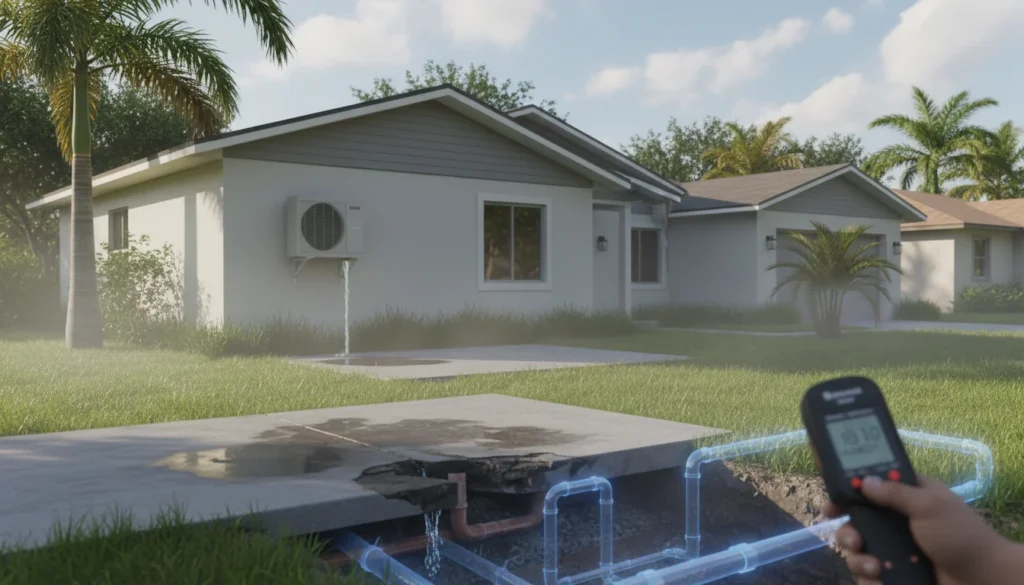
Understanding the Connection Between Your AC and Hidden Slab Leaks
When your air conditioning system runs constantly in Orlando’s heat but your home still feels uncomfortably damp and humid, most homeowners immediately assume their AC unit is failing. However, this puzzling combination of symptoms often points to a completely different problem lurking beneath your floors: a slab leak. The relationship between persistent humidity and underground plumbing failures is more connected than you might think, and recognizing this connection early can save you thousands in water damage and energy costs.
In Central Florida, where humidity is already a constant battle, an air conditioning system that cannot effectively dehumidify your home is more than just uncomfortable—it’s a red flag. When combined with other subtle signs like unexplained water bills or warm spots on your floor, the culprit is often a leak in the pipes running beneath your concrete foundation.
Why Your AC Can’t Keep Up: The Hidden Moisture Source
Your air conditioning system is designed to remove a specific amount of moisture from your indoor air as part of its cooling process. In Orlando, where outdoor humidity regularly exceeds 70%, your AC works overtime during summer months to maintain comfortable indoor conditions. However, when there’s a constant source of moisture being introduced into your home from below, even the most efficient system cannot keep pace.
A slab leak continuously releases water into the soil and concrete beneath your home. This moisture doesn’t just stay put—it evaporates upward through your flooring materials, creating a persistent humidity source that your AC system wasn’t designed to handle. The result is an air conditioner that runs continuously, struggles to reach the thermostat setting, and dramatically increases your electricity bills while failing to create a comfortable environment.
The Compounding Effect in Orlando’s Climate
Orlando’s subtropical climate creates the perfect storm for this problem. With average summer temperatures in the 90s and humidity levels that make the air feel even hotter, your HVAC system already operates at near-maximum capacity. Add an internal moisture source from a leak beneath your concrete foundation, and the system becomes completely overwhelmed. Homeowners often notice that certain rooms feel clammier than others, or that condensation forms on windows even when the AC is running full blast.
Recognizing the Warning Signs: More Than Just Humidity
While persistent dampness despite constant AC operation is a significant indicator, slab leaks rarely present with just one symptom. Understanding the full constellation of warning signs helps Orlando homeowners identify problems before they escalate into major structural damage or mold growth.
Physical Evidence in Your Home
Walk through your home and check for these telltale signs:
- Warm or hot spots on floors: If certain areas of your tile, wood, or carpet feel noticeably warmer than surrounding areas, this often indicates a hot water line leak beneath the slab. These temperature differences are particularly noticeable in air-conditioned homes where floors should feel cool.
- Visible moisture or discoloration: Unexplained wet spots, water stains, or discoloration on flooring, baseboards, or lower walls suggest water is wicking up from below.
- Cracking in floors or walls: As water saturates the soil beneath your foundation, it can cause shifting and settling that manifests as new cracks in your concrete slab, tile floors, or drywall.
- Musty odors: Persistent mildew or earthy smells, especially in specific areas of your home, indicate ongoing moisture problems that your nose detects before your eyes.
- Mold growth: Black spots or fuzzy growth on baseboards, carpeting edges, or walls near the floor signal excessive moisture at ground level.
Utility and System Changes
Beyond physical evidence, monitor these operational indicators:
- Unexplained water bill increases: If your water consumption has spiked without changes in household usage, water is escaping somewhere—often through underground pipes beneath your foundation.
- Water meter activity when no water is being used: Turn off all water sources in your home and check your meter. If it’s still moving, you have a leak somewhere in your system.
- Reduced water pressure: Slab leaks divert water before it reaches your fixtures, resulting in weaker flow from faucets and showerheads.
- Constantly running water heater: If you have a hot water line leak under your slab, your water heater will cycle more frequently to maintain temperature, increasing energy costs.
Why Slab Leaks Are Common in Orlando Homes
Understanding why Orlando experiences higher rates of slab leaks helps homeowners appreciate the urgency of addressing symptoms early. Several factors unique to Central Florida contribute to this vulnerability.
Soil Conditions and Foundation Movement
Orlando sits atop sandy soil with high water tables and limestone formations. This soil composition is prone to shifting, especially during Florida’s distinct wet and dry seasons. As the ground expands with moisture during rainy months and contracts during drier periods, the concrete slab and pipes embedded within or beneath it experience stress. Over time, this movement can cause copper pipes to crack or joints to separate, creating leaks.
Water Chemistry and Pipe Corrosion
Central Florida’s water supply is known for being hard, with high mineral content including calcium and magnesium. While this water is safe to drink, it’s tough on plumbing systems. The minerals create scale buildup inside pipes, and the chemical composition can accelerate corrosion of copper piping from the inside out. Homes built between the 1960s and 1990s are particularly vulnerable, as they often used copper piping that’s now reaching the end of its service life.
Construction Methods and Age
Many Orlando homes, particularly in established neighborhoods like Forest Hills and surrounding areas, were built on concrete slab foundations—a cost-effective and practical construction method for Florida’s climate. However, this design means water supply lines and sometimes drain lines run through or under the concrete. When these pipes fail, accessing them for repair requires breaking through the slab, making early detection crucial.
The Dangers of Delaying Slab Leak Repairs
When homeowners notice their AC running constantly and persistent dampness but delay investigation, the consequences compound quickly in Orlando’s climate.
Structural Damage
Continuous water intrusion beneath your foundation erodes soil support, creating voids that cause the slab to crack, settle unevenly, or even collapse in severe cases. What begins as a small leak can undermine the structural integrity of your entire home, leading to repairs costing tens of thousands of dollars.
Mold and Health Concerns
Orlando’s warm, humid environment is ideal for mold growth. When you add constant moisture from a slab leak, mold colonies can establish themselves in flooring materials, wall cavities, and HVAC ductwork. Some mold species produce allergens and irritants that affect respiratory health, particularly for children, elderly family members, and those with asthma or allergies.
Skyrocketing Utility Costs
A slab leak creates a double financial burden: wasted water flowing continuously increases your water bill, while the excess moisture forces your air conditioning system to run constantly, dramatically increasing electricity costs. Many Orlando homeowners report utility bills doubling or tripling before they discover the underlying leak.
Secondary Water Damage
As moisture accumulates, it damages flooring materials, baseboards, drywall, and personal belongings. Hardwood floors warp and buckle, carpet padding becomes saturated and moldy, and tile grout deteriorates. The longer a leak continues, the more extensive and expensive the remediation becomes.
Professional Detection: How Experts Find Hidden Leaks
When you suspect a slab leak, professional slab leak detection and repair services use advanced technology to pinpoint the problem without unnecessary demolition.
Electronic Leak Detection
Specialized listening equipment amplifies the sound of water escaping from pressurized pipes. Trained technicians can identify the distinctive frequency of a leak and trace it to its precise location beneath your concrete floor.
Infrared Thermal Imaging
Thermal cameras detect temperature variations in your flooring that indicate water presence. Hot water leaks show as warm spots, while cold water leaks appear cooler than surrounding areas. This non-invasive method quickly identifies problem areas for further investigation.
Pressure Testing
By isolating sections of your plumbing system and monitoring pressure changes, technicians can determine which line is leaking and narrow down the location before any concrete is broken.
Video Pipe Inspection
For accessible lines, miniature cameras inserted into pipes provide visual confirmation of cracks, corrosion, or separation, helping technicians plan the most effective repair approach.
What to Do If You Suspect a Slab Leak
If your AC is running constantly and your Orlando home feels damp despite the cooling efforts, take these immediate steps:
1. Document the symptoms: Note all unusual signs including specific locations of warm spots, dampness, or odors. Check your recent water and electricity bills for unusual increases.
2. Check your water meter: Turn off all water-using appliances and fixtures, then observe your water meter for several minutes. Any movement indicates water flowing somewhere in your system.
3. Contact a specialist immediately: Slab leaks require specialized detection equipment and expertise. Contact Slab Leak Repair South at (844) 257-3729 for professional assessment. Early detection minimizes damage and repair costs.
4. Avoid DIY diagnosis attempts: Randomly breaking into your concrete slab without proper detection can cause unnecessary damage, miss the actual leak location, and void insurance coverage in some cases.
5. Mitigate immediate damage: Use dehumidifiers to reduce indoor moisture, document damage with photos for insurance purposes, and move valuables away from affected areas.
Repair Options for Orlando Homeowners
Once a slab leak is confirmed and located, several repair approaches are available depending on the leak’s location, severity, and your home’s specific circumstances.
Direct Access Repair
For isolated leaks in accessible locations, technicians break through the concrete at the leak site, repair or replace the damaged pipe section, then restore the concrete and flooring. This approach works well for single leaks with minimal surrounding pipe deterioration.
Epoxy Pipe Coating
For pinhole leaks in otherwise sound pipes, epoxy coating can be applied to the pipe’s interior, creating a new surface that seals small leaks and prevents future corrosion. This method avoids breaking concrete but isn’t suitable for all leak types.
Pipe Rerouting
When pipes beneath the slab are extensively corroded or multiple leaks are likely, rerouting involves abandoning the under-slab lines and installing new pipes through walls or attic spaces. While more extensive initially, this approach eliminates the risk of future slab leaks in that line.
Whole-House Repiping
For older homes with deteriorating plumbing systems, complete repiping may be the most cost-effective long-term solution, especially if multiple leaks have already occurred or are imminent based on pipe condition.
Preventing Future Slab Leaks
While some factors contributing to slab leaks are beyond homeowner control, several preventive measures can extend your plumbing system’s life:
- Water pressure regulation: Install a pressure regulator if your home’s water pressure exceeds 80 PSI, as excessive pressure accelerates pipe wear.
- Water softening: Consider a water softener to reduce mineral buildup and corrosion in your pipes, particularly important with Orlando’s hard water.
- Chemical drain cleaner avoidance: Harsh chemicals can corrode pipes from the inside; use mechanical clearing methods instead.
- Foundation maintenance: Maintain consistent soil moisture around your foundation with proper drainage and irrigation to minimize ground movement.
- Regular inspections: Annual plumbing inspections can identify early warning signs before they become major problems.
The Importance of Choosing Experienced Local Professionals
Slab leak detection and repair requires specialized knowledge of Orlando’s unique conditions, from understanding local soil composition to familiarity with construction methods used in Central Florida homes across different decades. Experienced local professionals bring crucial advantages: they understand how seasonal weather patterns affect foundations, they’re familiar with common pipe materials used in Orlando-area construction, and they maintain relationships with local suppliers for quick access to materials.
Slab Leak Repair South specializes in serving Orlando homeowners with comprehensive detection and repair services. Our technicians understand the connection between your constantly running AC, persistent dampness, and potential slab leaks. We use the latest detection technology to locate problems quickly and accurately, minimizing disruption to your home and daily life.
Don’t let a hidden slab leak continue damaging your home, compromising your indoor air quality, and inflating your utility bills. If your air conditioning system runs constantly but your Orlando home still feels damp and uncomfortable, contact Slab Leak Repair South today at (844) 257-3729 for professional assessment and peace of mind.
Leave a Reply