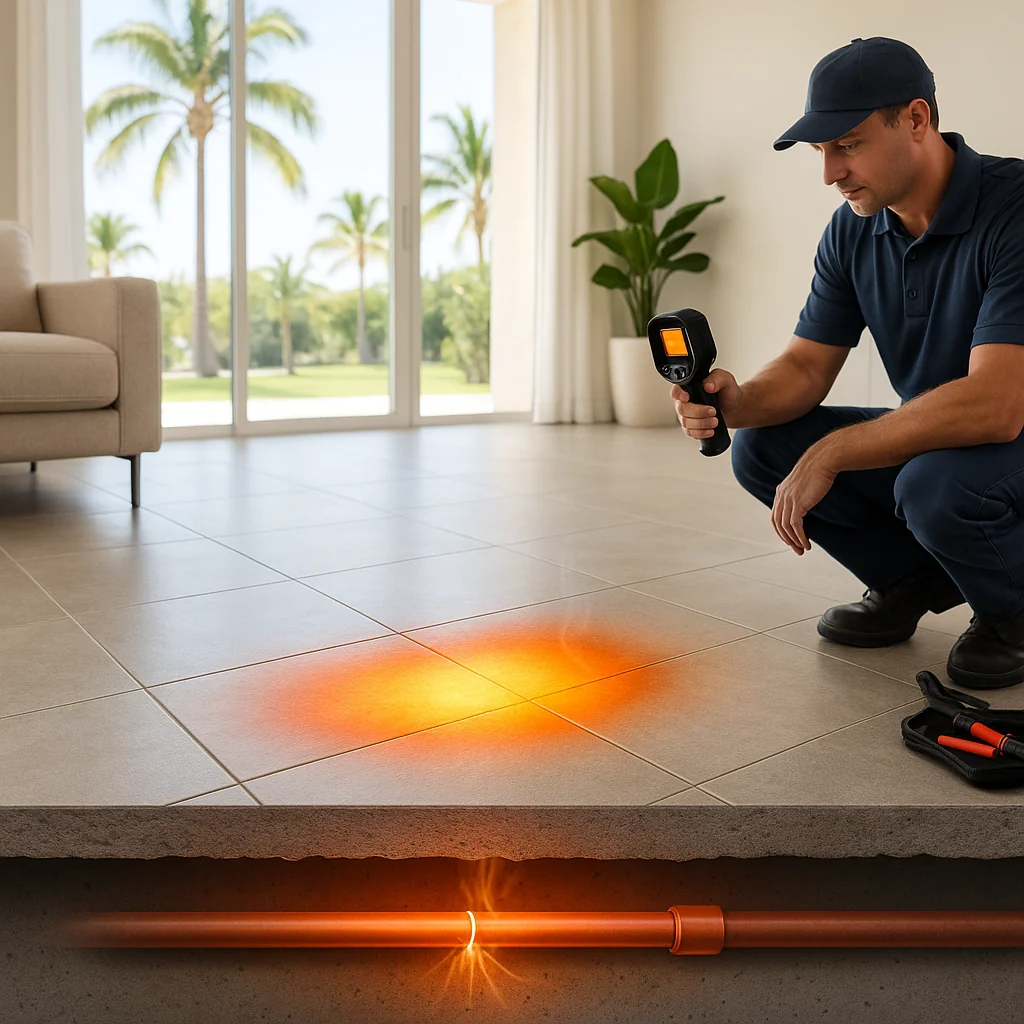
Direct Answer to Warm Floor Spots in August
In Orlando homes warm floor spots in August often signal a hidden slab leak beneath the concrete slab. The leak allows warm water from the plumbing system to heat the surrounding concrete which then radiates upward to the floor surface. Homeowners notice localized warmth especially under tiles or carpet in rooms that are not directly exposed to the sun. The presence of a slab leak means water is escaping from pipes that run beneath the slab and this water carries heat from the hot water system or from the earth that has warmed during the summer months. Detecting and repairing the leak stops the unwanted heating and protects the home from further damage.
Why August Amplifies the Problem
Orlando experiences high temperatures in August and the ground absorbs heat from the sun. The warm soil transfers heat to any water that is present in underground pipes. When a slab leak occurs the water becomes a conduit for heat moving from the hot water lines or from the heated earth into the concrete slab. The concrete acts like a radiator and the floor above feels warm to the touch. This effect is most noticeable in homes with tile flooring because tile conducts heat more efficiently than carpet.
How Slab Leaks Form
Ageing Pipe Materials
Most residential slabs were poured decades ago with copper or polybutylene piping beneath them. Over time corrosion or material fatigue creates small cracks or joints that leak. The leaks are often slow and hidden because the water spreads within the soil under the slab before it reaches the surface.
Improper Installation
Improper joint sealing or insufficient pipe support can cause stress points that develop leaks early in a home’s life. When the pipe flexes due to soil movement the joint may separate and water escapes.
High Water Pressure
Excessive water pressure in the home can force water through tiny weaknesses in the pipe wall. The constant pressure accelerates wear and eventually creates a leak that seeps into the slab.
Detecting Warm Floor Spots Early
Homeowners can perform simple checks before calling a professional. Feel the floor with the back of the hand in rooms that are shaded from direct sunlight. If the floor feels unusually warm compared to adjacent areas it may be a sign of a slab leak. Look for damp spots on the walls or a musty smell that could indicate water intrusion. Check the water bill for unexplained spikes that could signal hidden water loss.
Professional Slab Leak Detection Methods
Certified technicians use acoustic listening devices that amplify the sound of water flowing through a leak. The equipment can pinpoint the leak location without breaking the concrete. Infrared thermography is another tool that captures temperature differences on the floor surface. Warm spots captured in an infrared image often correlate with the leak path.
Repair Options for Slab Leaks
Once a leak is located the repair method depends on the leak size and location. Common techniques include pipe rerouting where a new pipe is installed above the slab and the damaged section is left in place. In some cases a pipe bursting method is used where a new pipe is pulled through the old pipe’s path while breaking the old pipe apart. For hot water line issues a dedicated hot water line slab leak repair service can address the specific heating component of the leak.
Why Orlando Residents Should Act Quickly
Delaying repair can cause the concrete to degrade as water seeps into cracks. The moisture can lead to mold growth which poses health risks. Additionally the warm water can cause floor finishes to warp or buckle. In the long term the structural integrity of the slab may be compromised.
Local Insights for Orlando Neighborhoods
Neighborhoods such as Ybor City and Channelside have many homes built in the 1990s with similar slab construction. Residents there have reported warm floor spots during the summer months and have benefited from early detection services. The historic district of Seminole Heights also experiences this issue due to older pipe materials. Homeowners in these areas should schedule an underground pipe leak detection inspection before the humidity rises further.
Preventive Maintenance Tips
- Maintain water pressure within the recommended range for your home
- Inspect visible piping for signs of corrosion or leaks
- Schedule annual leak detection inspections during the cooler months
- Use a water softener if hard water is present to reduce pipe scaling
Understanding the Cost Benefits
Repairing a slab leak early can save thousands of dollars in water waste and property damage. The cost of a professional detection service is modest compared to the expense of replacing flooring or repairing structural damage. Homeowners who act quickly also protect their property value in a competitive Orlando market.
Summary Table of Key Points
| Issue | Cause | Detection Method | Recommended Action |
|---|---|---|---|
| Warm floor spot | Hidden slab leak | Infrared thermography | Schedule professional leak detection |
| Moisture odor | Water seepage from pipe joint | Acoustic listening | Repair hot water line slab leak |
When to Call a Professional
If the warm spot persists after checking for surface heat sources or if you notice water stains on walls it is time to contact a licensed slab leak specialist. A qualified technician will perform a thorough assessment, locate the leak accurately, and recommend the most effective repair method for your home.
Leave a Reply