Recognizing Hidden Slab Leak Warning Signs During Tampa’s Peak Summer
Tampa homeowners often miss critical slab leak warning signs during August, when increased water usage and seasonal factors mask underlying foundation issues. The combination of high temperatures, increased humidity, and peak air conditioning usage creates the perfect storm for undetected water line failures beneath your concrete foundation. Understanding these often-overlooked indicators can save you thousands in repair costs and prevent catastrophic structural damage to your home.
August in Tampa brings unique challenges that make slab leak detection particularly difficult. With families using more water for pools, outdoor activities, and cooling systems, unusual water consumption patterns become harder to identify. Additionally, the natural moisture in Florida’s summer air can disguise the humidity increases that typically signal foundation water intrusion.
The Subtle Temperature Variations Most Homeowners Ignore
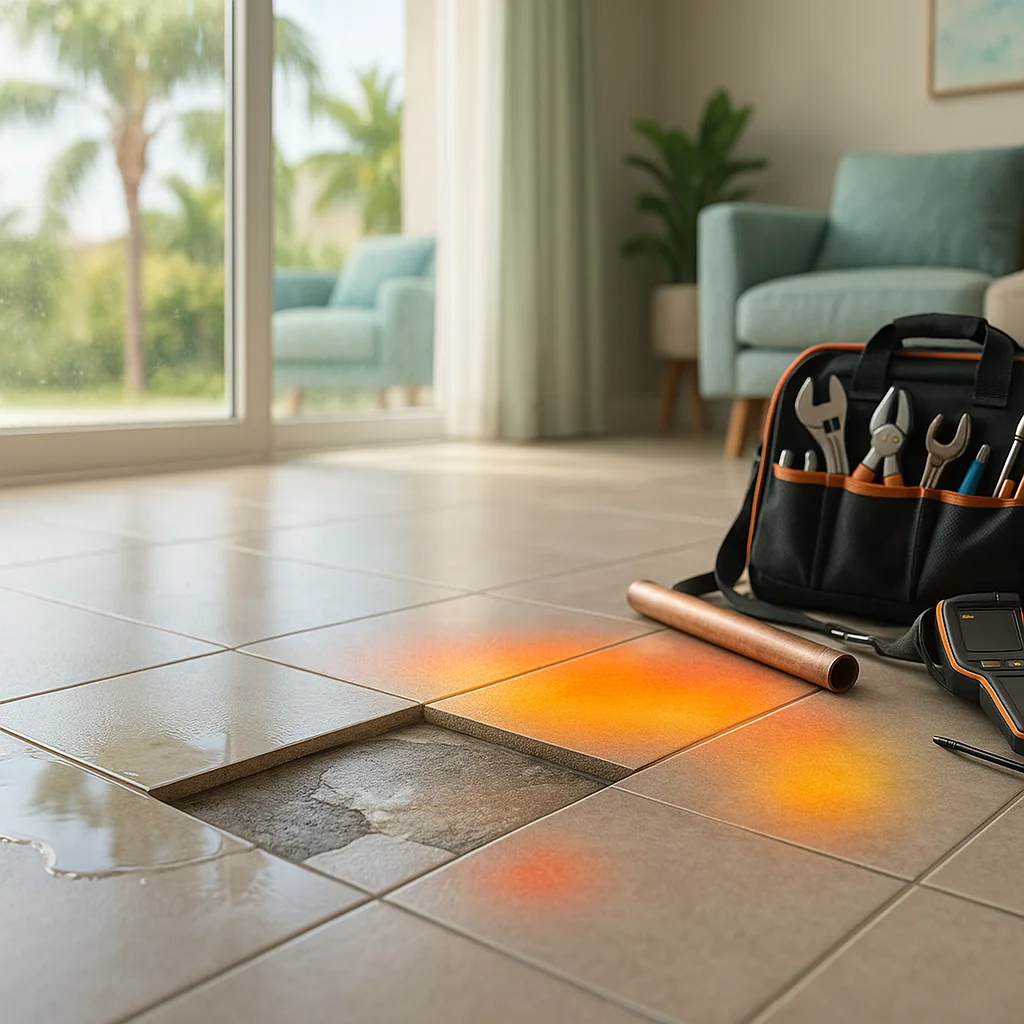
One of the most commonly missed signs of a slab leak involves unexpected temperature differences in your flooring. During August, when Tampa homes run air conditioning constantly, warm spots on tile or hardwood floors become especially noticeable—yet homeowners frequently attribute these to sun exposure or inadequate cooling.
If you notice areas of your floor that feel warmer than surrounding sections, particularly in rooms without direct sunlight, this could indicate hot water line damage beneath your foundation. The warm water escaping from compromised pipes heats the concrete slab and the flooring materials above it, creating detectable temperature variations.
These warm spots often appear in bathrooms, kitchens, or laundry rooms where hot water lines run beneath the slab. In neighborhoods like Seminole Heights, where many homes were built in the mid-20th century, aging copper pipes become particularly susceptible to pinhole leaks that create these temperature anomalies.
How to Properly Check for Temperature Variations
Walk barefoot through your home during the coolest part of the day, typically early morning. Pay attention to any sections of flooring that feel noticeably warmer than others. Use an infrared thermometer to measure exact temperature differences if you suspect an issue. Temperature variations of more than 10 degrees Fahrenheit between adjacent floor sections warrant professional investigation.
Unexpected Water Pressure Fluctuations During Peak Usage Times
August water pressure issues often get dismissed as normal consequences of neighborhood-wide increased usage. However, inconsistent water pressure—especially when it affects only certain fixtures or occurs at unusual times—frequently indicates a slab leak diverting water before it reaches your faucets and showerheads.
Tampa homeowners should be particularly alert to pressure drops that occur when no other water is being used in the home. If your shower pressure decreases significantly even when no other fixtures are running, water may be escaping through a foundation leak rather than reaching your plumbing fixtures.
The situation becomes more complex in areas with older infrastructure. Homes in University Square and surrounding neighborhoods often experience pressure fluctuations due to both municipal supply variations and individual property line issues, making proper diagnosis essential.
Documenting Pressure Changes
Keep a simple log of when you notice pressure changes, which fixtures are affected, and what other water usage was occurring at the time. This information helps professionals determine whether the issue stems from municipal supply, household plumbing, or a slab leak. Test pressure at the same time daily for a week to establish patterns.
Mysterious Increases in Your August Water Bill
Summer water bills naturally increase in Tampa, but dramatic spikes without corresponding usage changes signal potential problems. Many homeowners expect higher bills in August due to lawn irrigation, pool filling, and increased household usage, which allows significant slab leaks to go unnoticed for months.
A slab leak can waste hundreds of gallons daily, creating water bills that exceed even generous estimates of increased summer usage. Compare your current August bill not just to the previous month, but to August bills from previous years. An increase of more than 25-30% without explanation deserves immediate investigation.
Calculate your expected usage increase based on known factors: additional showers, lawn watering, pool maintenance, and guest visits. If your bill exceeds this calculated amount significantly, professional slab leak detection services can determine whether foundation leaks are responsible.
Understanding Your Water Meter
Learn to read your water meter and perform a simple leak test. Turn off all water-using appliances and fixtures, then check if the meter continues moving. Any movement indicates water flowing somewhere in your system—potentially through a slab leak. Document the meter reading before bed and immediately upon waking; overnight usage should be minimal unless you have a leak.
Foundation Cracks That Appear or Worsen in Summer Heat
While some foundation settling is normal in Florida’s sandy soil, new cracks or rapidly expanding existing cracks during August often indicate water undermining your foundation’s stability. The combination of heat expansion and water intrusion from slab leaks creates ideal conditions for structural damage.
Pay particular attention to cracks that appear suddenly, run horizontally along walls, or create stair-step patterns in brick or block construction. These patterns suggest foundation movement caused by soil erosion beneath the slab—frequently the result of ongoing water leaks washing away supporting soil.
Tampa’s summer heat causes concrete expansion, but water from slab leaks prevents proper drainage and creates pockets of saturated soil that cannot support the foundation’s weight. This combination accelerates crack formation and widening, particularly in older homes throughout neighborhoods like Ybor City where foundations have already experienced decades of settling.
Monitoring Crack Development
Photograph any cracks you discover and measure their width with a ruler. Check weekly to see if they’re expanding. Cracks wider than 1/4 inch or those that grow noticeably week-to-week require professional evaluation. Mark crack endpoints with pencil and date them to track growth accurately.
Unusual Sounds in Walls or Under Floors
August’s constant air conditioning operation can mask the subtle sounds of water flowing where it shouldn’t. However, homeowners who listen carefully during quiet moments may detect unusual gurgling, hissing, or rushing water sounds that indicate slab leaks.
These sounds often become most noticeable at night when household activity decreases and background noise diminishes. The sound of running water when no fixtures are in use is a clear warning sign that water is escaping somewhere in your system, quite possibly beneath your foundation.
The acoustic properties of concrete slabs can transmit water sounds throughout your home, making it difficult to pinpoint the exact location. You might hear water sounds in rooms far from the actual leak source, which is why professional detection equipment becomes necessary for accurate diagnosis.
Conducting a Sound Survey
Choose a quiet time when all appliances are off and household members are still. Walk through each room, listening near baseboards and floor surfaces. Pay special attention to bathrooms, kitchens, and utility rooms where water lines concentrate. Note any locations where water sounds are audible and contact professionals for thorough investigation.
Mold and Mildew Growth Despite Proper Ventilation
Tampa’s humid August climate creates mold-friendly conditions throughout the region, but persistent mold growth in specific areas—despite proper ventilation and dehumidification—often indicates hidden moisture from slab leaks. This is particularly concerning because the moisture source is concealed beneath flooring, making it difficult to address with standard mold remediation.
Look for mold or mildew appearing along baseboards, in corners, or on lower wall sections. Musty odors that persist despite cleaning and air circulation also suggest hidden water intrusion. These signs become especially significant when they appear in areas without obvious moisture sources like bathrooms or kitchens.
Slab leaks create perfect conditions for mold growth by providing constant moisture in dark, enclosed spaces beneath flooring. The moisture wicks upward through concrete and flooring materials, creating damp conditions that support microbial growth even when surfaces appear dry.
Health Implications and Documentation
Mold from slab leaks poses serious health risks, particularly for individuals with respiratory conditions or compromised immune systems. Document any mold growth with photographs, note when it first appeared, and track whether it returns after cleaning. Recurring mold in the same locations strongly suggests an underlying moisture problem requiring professional investigation.
Carpet Discoloration and Persistent Dampness
Carpeted areas above slab leaks often develop dark stains, discoloration, or persistent dampness that homeowners mistake for spills or pet accidents. In August, when humidity is high, these damp spots may feel only slightly different from surrounding carpet, making them easy to overlook.
Check carpet in low-traffic areas where spills are unlikely: along walls, in corners, or under furniture. Press firmly on suspected areas—carpet above a slab leak will feel spongy and may release water when compressed. The padding beneath will be saturated, though the carpet surface might appear relatively dry.
Discoloration patterns from slab leaks typically appear circular or irregular rather than the defined shapes of surface spills. The stains may spread slowly over weeks as water continues seeping upward through the concrete and padding.
Testing Carpet Moisture
Use a moisture meter designed for flooring to test suspected areas. Readings consistently above 15-20% indicate excessive moisture requiring investigation. Compare readings from the suspected area to dry sections of the same carpet to establish baseline moisture levels for your home’s normal humidity conditions.
Landscape Changes and Unexplained Wet Spots in Your Yard
While this article focuses on interior signs, exterior indicators often provide the first clues of slab leaks. August’s frequent afternoon thunderstorms can disguise persistently wet areas in your yard, but sections that remain soggy days after rain or during dry spells warrant investigation.
Look for areas of unusually lush grass growth, particularly near your home’s foundation. Leaking water provides constant irrigation that creates greener, faster-growing grass compared to surrounding areas. Conversely, some leaks create areas where grass dies due to soil saturation and root rot.
Cracks in exterior slabs, sidewalks, or driveways near your home may indicate soil erosion from underground water leaks. Water escaping from foundation leaks follows the path of least resistance, often emerging at the foundation perimeter or through expansion joints in concrete.
The Importance of Professional Detection in August
Tampa’s August conditions make DIY slab leak detection particularly challenging. High humidity, increased water usage, and constant air conditioning operation create confusing variables that complicate accurate diagnosis. Professional detection services use specialized equipment that eliminates guesswork and pinpoints leak locations without destructive exploratory methods.
Modern detection technology includes acoustic listening devices, infrared thermal imaging, and pressure testing systems that identify leaks through concrete slabs. These non-invasive methods locate problems accurately, minimizing repair costs and property disruption.
Delaying professional inspection when you notice warning signs allows minor leaks to become major problems. Water damage accelerates exponentially—a small leak that seems manageable today can undermine your entire foundation within months, creating repair bills ten times larger than early intervention would have cost.
Why August Timing Matters for Tampa Homeowners
Addressing suspected slab leaks in August, before Florida’s fall rainy season, provides strategic advantages. Repairs completed during relatively dry weather face fewer complications from ground saturation and allow proper curing of any concrete work required.
Additionally, catching leaks before they worsen through another wet season prevents the compounding damage that occurs when already-compromised foundations face additional water stress. The soil erosion, concrete degradation, and structural shifting caused by slab leaks accelerate dramatically when seasonal rains add to the water already escaping beneath your home.
August also represents a time when many Tampa families are home more consistently, making it easier to monitor water usage patterns, schedule inspections, and be present for repair work. Taking action now prevents the holiday season disruptions that would occur if the problem worsens and requires emergency intervention later in the year.
Taking Action When You Suspect a Slab Leak
If you’ve noticed any combination of these warning signs, immediate professional evaluation is essential. Contact Slab Leak Repair South at (844) 257-3729 for comprehensive detection services throughout the Tampa area. Our experienced technicians use advanced diagnostic equipment to locate leaks accurately and provide detailed repair recommendations.
Don’t wait for warning signs to worsen or multiply. Early detection and repair prevent the cascading problems that transform minor leaks into foundation catastrophes. Professional inspection provides peace of mind—either confirming that your foundation is sound or identifying problems while they remain manageable and affordable to fix.
Tampa homeowners deserve the security of knowing their foundation is protected. Whether you’re experiencing obvious problems or simply want to verify that subtle signs don’t indicate serious issues, professional slab leak detection delivers the answers you need to protect your home and your investment.
Leave a Reply