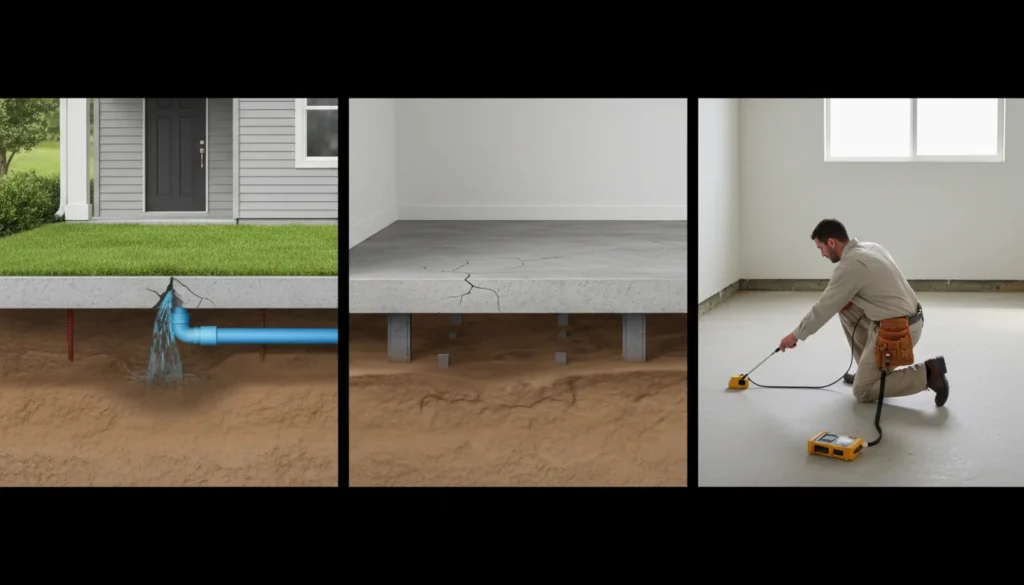
Understanding Slab Leaks in Tampa’s Unique Soil Conditions
Hidden slab leaks pose a significant threat to home foundations throughout the Tampa Bay region, where saturated soil conditions create the perfect storm for structural damage. When water pipes embedded within concrete foundation slabs develop leaks, they release water into the surrounding soil, exacerbating the already moisture-rich environment that characterizes Florida’s Gulf Coast. This combination of pressurized water escape and naturally saturated ground creates subsurface erosion, soil displacement, and ultimately foundation instability that can compromise your entire home’s structural integrity.
Tampa’s geological composition, featuring sandy soils with high water tables and frequent seasonal flooding, makes homes particularly vulnerable to the compounding effects of slab leaks. Unlike drier climates where leaking water might evaporate or be absorbed without major consequence, Tampa’s perpetually moist soil conditions mean that additional water from slab leaks has nowhere to go, creating hydrostatic pressure that undermines foundation stability from below.
The Hidden Nature of Slab Leak Foundation Damage
One of the most dangerous aspects of slab leaks is their concealed location beneath concrete foundations, making them virtually impossible to detect through casual observation until significant damage has already occurred. Homeowners often remain unaware that gallons of water are escaping daily into the soil beneath their homes, silently eroding the stable base upon which their entire structure rests.
The insidious progression of foundation damage from slab leaks typically follows a predictable pattern. Initially, small amounts of water seep into the surrounding soil, creating localized soft spots. As the leak continues undetected, these soft areas expand, causing differential settlement where some portions of the foundation sink while others remain stable. This uneven settling creates stress fractures in the concrete slab itself, which then propagate to walls, doorframes, and other structural elements throughout the home.
Early Warning Signs Often Mistaken for Other Issues
Many homeowners in neighborhoods like Ybor City initially attribute foundation problems to Florida’s natural settling or age-related deterioration, not realizing that an active slab leak is accelerating the damage. Cracks appearing in tile floors, doors that suddenly stick or won’t latch properly, and unexplained increases in water bills all point toward hidden plumbing failures beneath the slab.
The challenge with Tampa’s saturated soil is that it masks some traditional leak detection indicators. In drier climates, homeowners might notice wet spots on floors or carpets, but Tampa’s humidity and naturally moist conditions can make these signs less obvious. By the time visible water damage appears inside the home, the foundation may have already sustained considerable compromise.
How Tampa’s Saturated Soil Amplifies Foundation Problems
Tampa sits atop a complex geological foundation consisting primarily of sandy soils with limestone bedrock at varying depths. The region’s average annual rainfall exceeds 50 inches, and the water table often sits just a few feet below the surface. This perpetual saturation means the soil beneath Tampa homes exists in a delicate equilibrium, where any additional water input can dramatically alter load-bearing capacity.
When a slab leak introduces pressurized water into this already saturated environment, several destructive processes begin simultaneously. The escaping water creates channels through the sandy soil, washing away fine particles and creating voids beneath the foundation. These voids eliminate the uniform support that concrete slabs require, leading to differential settlement and cracking.
Hydrostatic Pressure and Foundation Heaving
In Tampa’s saturated conditions, slab leaks can also cause foundation heaving, where sections of the slab actually rise rather than sink. This occurs when water accumulates beneath the foundation faster than it can drain away through the already moisture-laden soil. The trapped water creates upward pressure that lifts portions of the slab, causing it to crack and separate from the stable sections.
This heaving phenomenon is particularly problematic in areas with clay components mixed into the sandy soil, as clay expands significantly when wet. Neighborhoods throughout the Tampa region experience varying soil compositions, making professional assessment critical for understanding your specific foundation vulnerability.
The Progressive Timeline of Foundation Damage
Understanding how quickly slab leaks can compromise foundations helps homeowners appreciate the urgency of detection and repair. In Tampa’s saturated soil conditions, the timeline from initial leak to significant structural damage can be surprisingly short.
Weeks 1-4: A new slab leak begins eroding soil directly adjacent to the pipe. Homeowners typically notice no symptoms during this phase, though water bills may show slight increases. The saturated soil readily accepts the additional water, masking the problem.
Months 2-6: Soil erosion creates small voids beneath the foundation. Minor settling may cause hairline cracks in tile or drywall, often dismissed as normal settling. In communities like Seminole Heights, where many homes date from the mid-20th century, these signs might be incorrectly attributed to age.
Months 6-12: Foundation settlement becomes pronounced, with visible floor cracks, sticking doors, and separation between walls and ceilings. The slab may develop significant cracks, and in severe cases, portions may tilt or heave. At this stage, slab leak rerouting may be necessary to bypass damaged sections of pipe entirely.
Beyond One Year: Uncorrected slab leaks can cause catastrophic foundation failure requiring extensive and expensive remediation. Structural engineers may need to implement foundation underpinning, concrete slab replacement, or other major interventions costing tens of thousands of dollars.
Specific Vulnerabilities in Tampa-Area Homes
Certain characteristics common to Tampa-area residential construction create particular vulnerability to slab leak foundation damage. Understanding these factors helps homeowners assess their risk level and prioritize preventive measures.
Copper Pipe Corrosion in Florida’s Water Chemistry
Many Tampa homes built between 1950 and 2000 feature copper water lines embedded in the foundation slab. Florida’s water chemistry, characterized by slightly acidic pH levels and mineral content, accelerates copper pipe corrosion. This corrosion process creates pinhole leaks that can persist for months or years before being detected, all while continuously undermining foundation stability.
The combination of corrosive water chemistry and saturated soil conditions creates a particularly aggressive environment for copper pipes. Electrolysis between the copper pipes and rebar in the concrete slab can further accelerate deterioration, especially in homes with improper grounding of electrical systems.
Concrete Slab Construction Methods
Post-tension slab foundations, common in newer Tampa construction, present unique challenges when slab leaks occur. These foundations use steel cables tensioned within the concrete to provide structural strength. When slab leaks compromise the concrete around these cables, the foundation’s integrity can deteriorate rapidly, and repairs become significantly more complex and expensive.
Traditional reinforced concrete slabs, more common in older neighborhoods throughout Tampa, are somewhat more forgiving when leaks occur, but still suffer progressive damage as saturated soil erodes support beneath the concrete.
Detection Methods for Hidden Slab Leaks
Professional slab leak detection has advanced significantly in recent years, allowing specialists to pinpoint leak locations without destructive exploratory demolition. These non-invasive techniques are particularly valuable in Tampa, where the saturated soil conditions make accurate leak location critical for effective repair.
Electronic Leak Detection Technology
Modern electronic amplification equipment allows technicians to hear the sound of water escaping from pressurized pipes beneath concrete slabs. These sensitive devices can detect the characteristic frequency of water leaks even through several inches of concrete and soil. In areas like Northdale, where newer construction often features thicker slabs, this technology proves invaluable.
Infrared Thermography
Thermal imaging cameras detect temperature variations in floors that indicate water presence beneath the slab. Leaking water creates cooler spots on the floor surface, visible through infrared imaging even when no moisture is apparent to the naked eye. This method works particularly well in Tampa’s climate, where the temperature differential between escaping water and the surrounding environment remains consistent.
Pressure Testing and Flow Analysis
Isolating sections of the plumbing system and monitoring pressure drops helps technicians determine not only whether a leak exists but also which line is compromised. This systematic approach narrows the search area before deploying more precise detection methods, reducing diagnostic time and cost.
Foundation Repair Options After Slab Leak Damage
Once a slab leak has been detected and repaired, addressing the resulting foundation damage becomes the next critical step. The appropriate repair method depends on the extent of damage, soil conditions, and the home’s structural configuration.
Foundation Stabilization Techniques
For homes experiencing differential settlement due to soil erosion from slab leaks, foundation underpinning provides permanent stabilization. This process involves driving steel piers or helical anchors through the unstable soil to bedrock or load-bearing strata, then hydraulically lifting the foundation back to level. In Tampa’s geology, these piers typically extend 15-30 feet below the surface to reach stable limestone layers.
Polyurethane foam injection offers a less invasive option for moderate foundation settlement. This technique pumps expanding foam beneath the slab, filling voids created by soil erosion and providing renewed support. The foam’s hydrophobic properties make it particularly suitable for Tampa’s wet soil conditions, as it won’t degrade or compress when exposed to moisture.
Slab Crack Repair and Sealing
After stabilizing the foundation, repairing cracks in the concrete slab prevents future water intrusion and structural deterioration. Epoxy injection fills and bonds cracks, restoring the slab’s structural integrity. For larger cracks or areas of significant damage, concrete removal and replacement may be necessary.
Prevention Strategies for Tampa Homeowners
While not all slab leaks can be prevented, homeowners can take proactive steps to minimize risk and catch problems early before extensive foundation damage occurs.
Regular Plumbing Inspections
Annual plumbing inspections by qualified professionals can identify pipe deterioration before leaks develop. These inspections should include pressure testing, visual examination of accessible pipes, and water quality analysis to identify corrosive conditions that threaten embedded pipes.
Water Pressure Management
Excessive water pressure accelerates pipe wear and increases the severity of leaks when they occur. Installing a pressure-reducing valve maintains optimal pressure levels, typically between 40-60 PSI, extending pipe lifespan and reducing leak risk. In communities like University Square, where municipal water pressure can fluctuate significantly, pressure regulation is particularly important.
Water Quality Treatment
Addressing corrosive water chemistry through whole-house water treatment systems can dramatically slow copper pipe deterioration. pH adjustment, mineral filtration, and corrosion inhibitor injection all contribute to extending the service life of pipes embedded in foundation slabs.
Monitoring for Early Warning Signs
Homeowners should remain vigilant for indicators of potential slab leaks, including unexplained water bill increases, sounds of running water when fixtures are off, warm spots on floors, foundation cracks, and doors or windows that suddenly stick. Catching leaks in their early stages, before significant foundation damage occurs, can save thousands of dollars in repair costs.
The Financial Impact of Delayed Detection
The cost differential between early slab leak detection and repair versus addressing advanced foundation damage is substantial. A typical slab leak repair, caught early, might cost between $2,000 and $4,000, including leak location, pipe access, repair, and concrete restoration. However, when foundation damage has progressed to require stabilization and structural repair, costs can easily exceed $15,000 to $30,000 or more.
Insurance coverage for slab leak damage varies significantly depending on policy terms and the cause of the leak. Most homeowners policies cover the cost of accessing and repairing the leak itself, but may not cover the resulting foundation damage if it’s deemed to have occurred gradually over time. This coverage gap makes early detection even more critical from a financial perspective.
Working with Qualified Professionals
Successfully addressing slab leaks and foundation damage requires expertise in multiple disciplines, including plumbing, foundation engineering, and soil mechanics. Homeowners should seek contractors with specific experience in Tampa’s unique conditions, including saturated soil challenges and Florida’s building codes.
Proper slab leak remediation involves not just fixing the immediate pipe failure, but also assessing and addressing any foundation compromise that has occurred. This comprehensive approach ensures that both the symptom and its consequences receive appropriate attention, protecting your home’s long-term structural integrity and value.
Leave a Reply